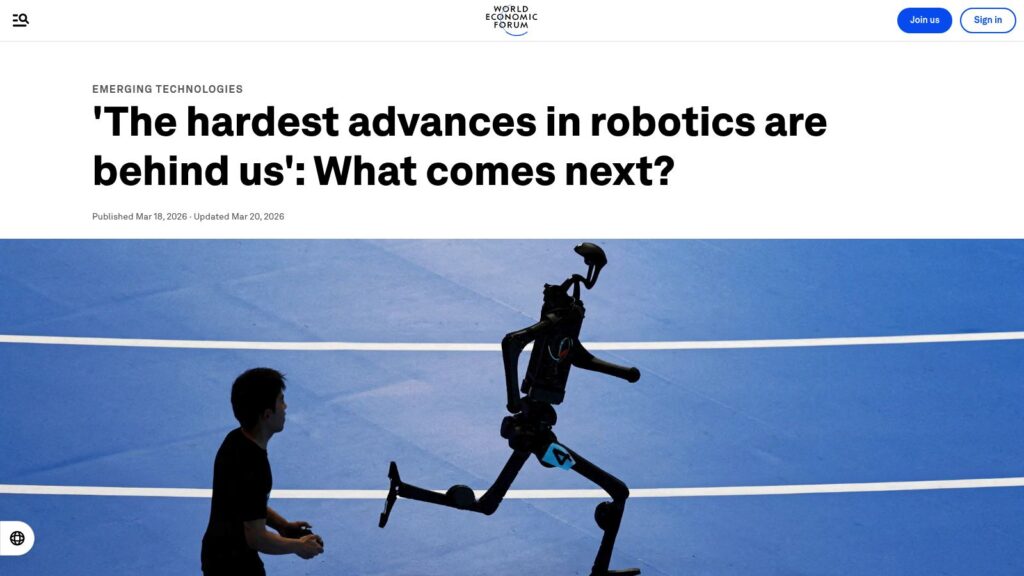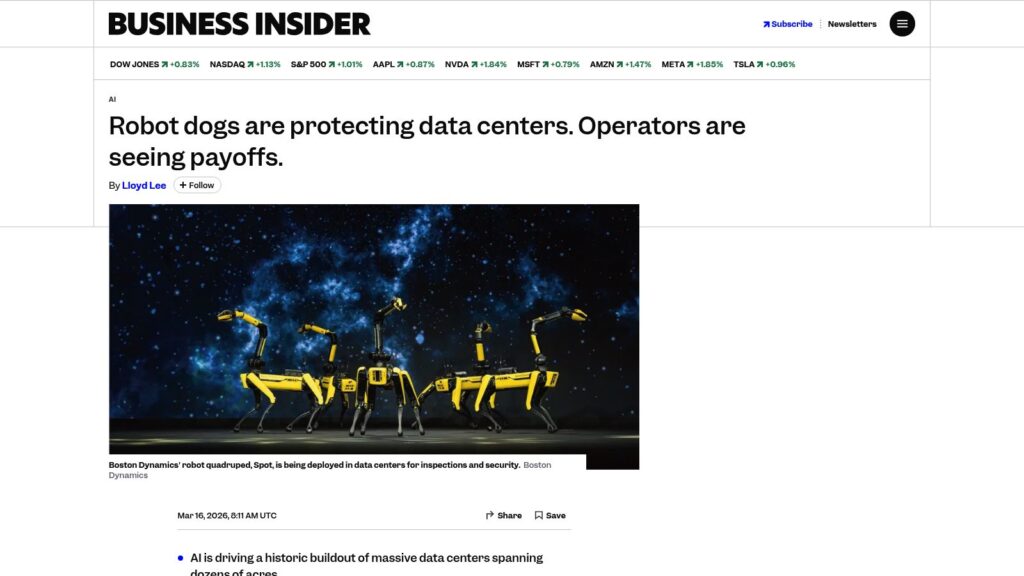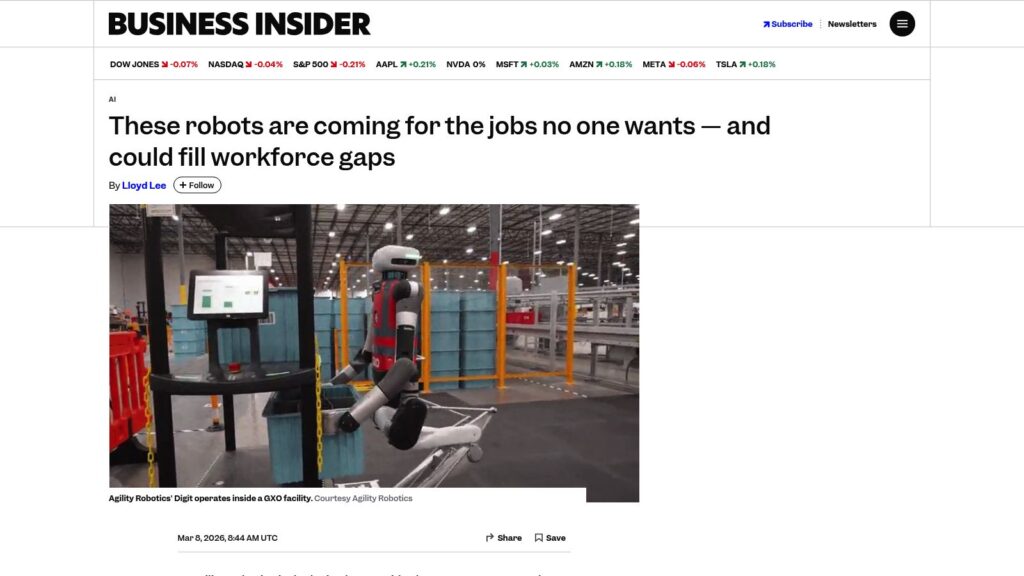
robotization

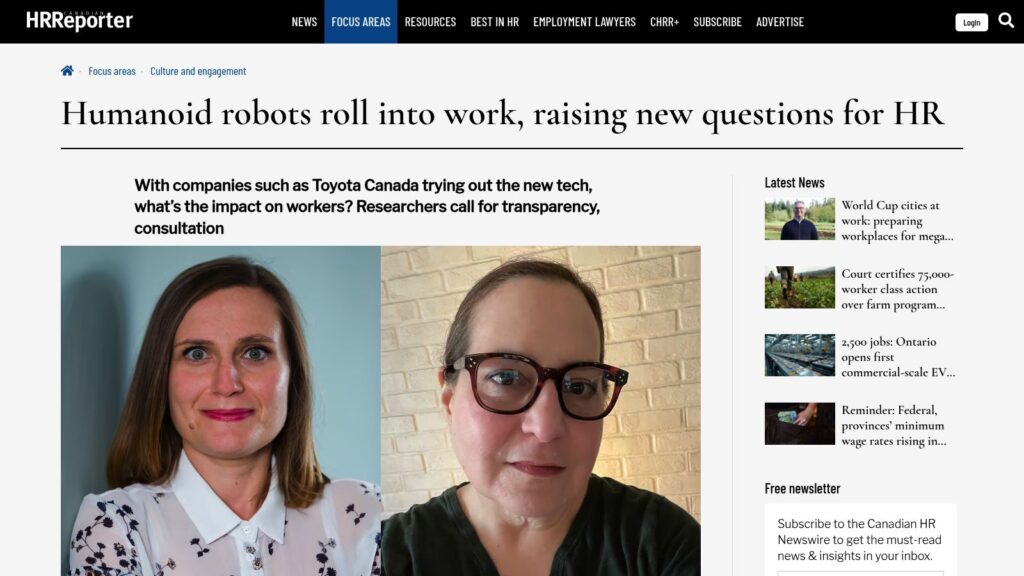
Humanoid Robots Roll Into Work, Raising New Questions for HR

Humanoid robots are entering workplaces, prompting HR concerns about employee impacts. Companies like Toyota and Canadian Tire are testing robots to reduce physical labor and allow staff to focus on higher-value tasks. Researchers emphasize the importance of transparency, worker consultation, and proper integration metrics to ensure technology enhances job satisfaction. However, potential issues include job insecurity, diminished social interaction, and the need for clear policies on interactions with robots. The success of these implementations hinges on effective communication between management and staff regarding the goals and impacts of automation.

https://www.hrreporter.com/focus-areas/culture-and-engagement/humanoid-robots-roll-into-work-raising-new-questions-for-hr/394146

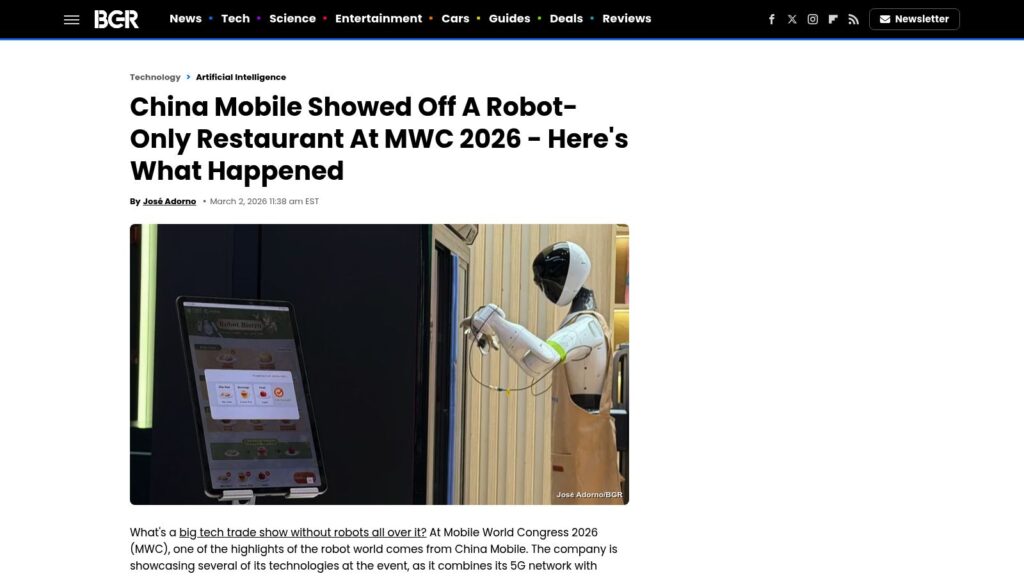
China Mobile Showed Off a Robot-Only Restaurant At MWC 2026 – Here’s What Happened

China Mobile showcased a robot-only restaurant at MWC 2026, integrating 5G, AI, and cloud services. Customers ordered via tablets while a main robot coordinated tasks among others, achieving a 92% accuracy rate. The event demonstrated a vision for future fast-food operations, emphasizing stability and efficiency over replacing human jobs soon.

https://www.bgr.com/2113530/china-mobile-robot-only-restaurant-experience-mwc-2026/

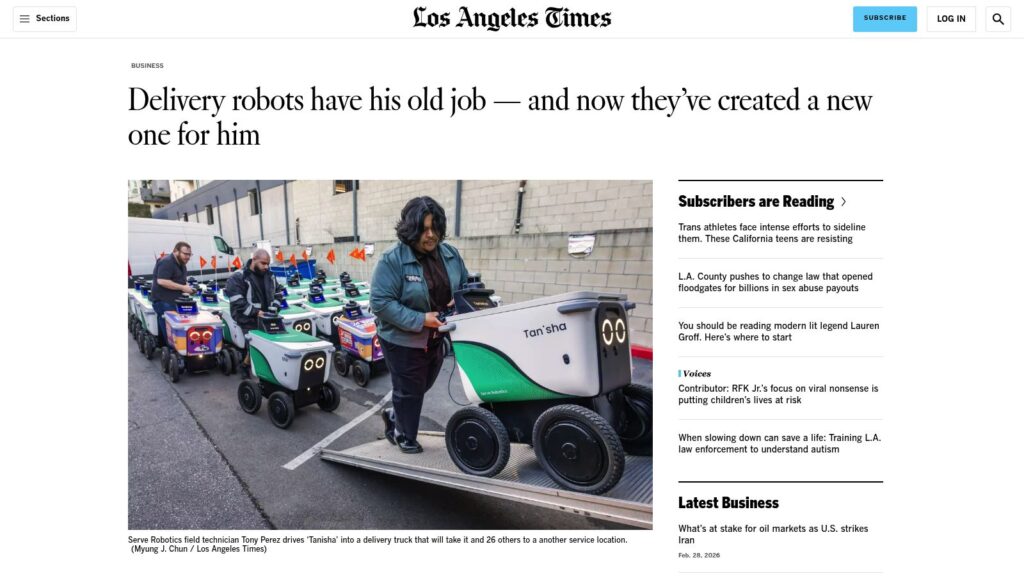
Delivery Robots Have His Old Job — and Now They’ve Created a New One for Him

AI delivery robots are replacing drivers, creating a new job: robot wrangler. These workers help robots navigate obstacles, provide maintenance, and ensure they operate effectively. Charlie Snodgrass, a former gig driver, is among the first to take on this role, checking and managing multiple robots daily as companies like Serve Robotics expand their fleets. Demand for such positions is rising as robots become more integrated into urban infrastructure.

https://www.latimes.com/business/story/2026-02-25/theres-job-that-ai-isnt-eliminating-robot-wrangler

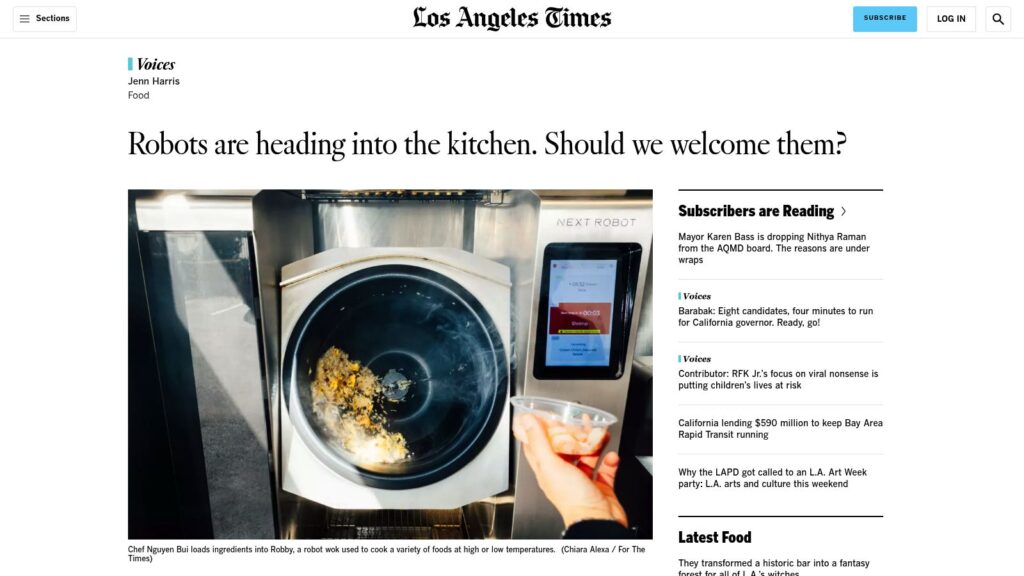
Column: Robots Are Heading Into the Kitchen. Should We Welcome Them?

Robotic cooking machines like Robby and Al Dente are revolutionizing kitchens, preparing dishes like fried rice consistently. These machines still require human input but can enhance efficiency in restaurant operations. Robby, made by Next Robot, can cook large quantities while maintaining quality and is already used in various locations, including schools and restaurants. The technology aims to replicate complex cooking techniques, addressing issues of inconsistency in food preparation, with ongoing developments improving their functionality. Chefs see these machines as tools to streamline operations rather than replacements.

https://www.latimes.com/food/story/2026-02-23/robot-cooking-machinery-woks-future-los-angeles-restaurants-dining

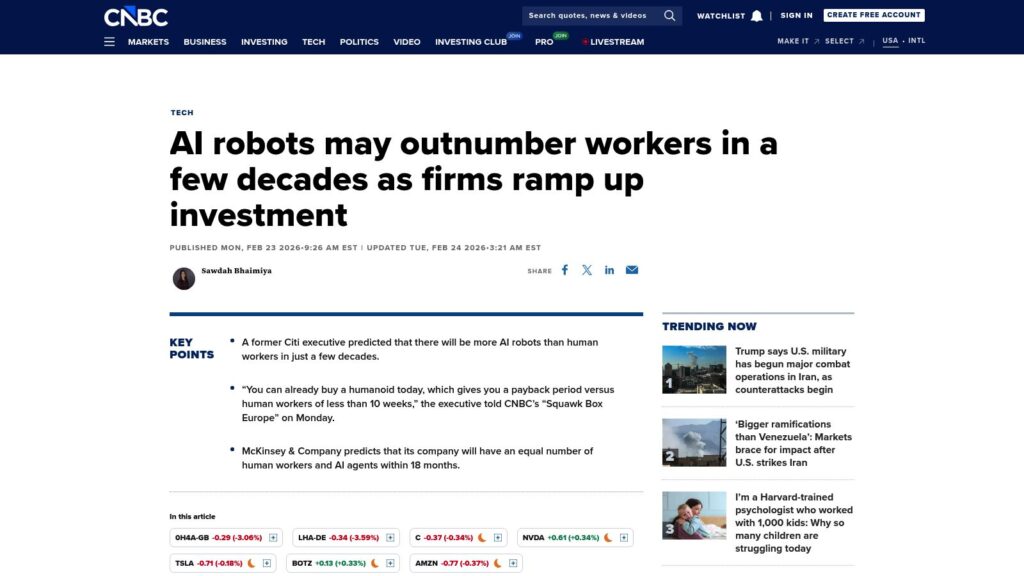
AI Robots May Outnumber Workers in a Few Decades as Firms Ramp up Investment

AI robots may outnumber human workers in decades due to increased corporate investment and profitability focus. Former Citi executive predicts AI robots’ rapid growth, estimating 1.3 billion by 2035 and 4 billion by 2050. Robots often pay for themselves rapidly, making them more cost-effective than humans. McKinsey reports the workforce will soon balance between humans and AI agents. AI’s impact on jobs will be significant, creating concerns over worker displacement while also promising high-tech job opportunities.

https://www.cnbc.com/2026/02/23/ai-robots-outnumber-workers-agents-few-decades-citi.html

The Human Work Behind Humanoid Robots Is Being Hidden

AI advancements in humanoid robots often hide the significant human labor involved. Companies, driven by hype, create unrealistic expectations about robot capabilities. As robots learn from human actions, workers are reduced to data gatherers, raising privacy concerns and reflecting gig-work dynamics. Transparency is lacking, and without it, the real limitations of robotic intelligence are obscured, leading to potential misunderstandings and risks, such as those seen in automotive technologies.

https://www.technologyreview.com/2026/02/23/1133508/the-human-work-behind-humanoid-robots-is-being-hidden/

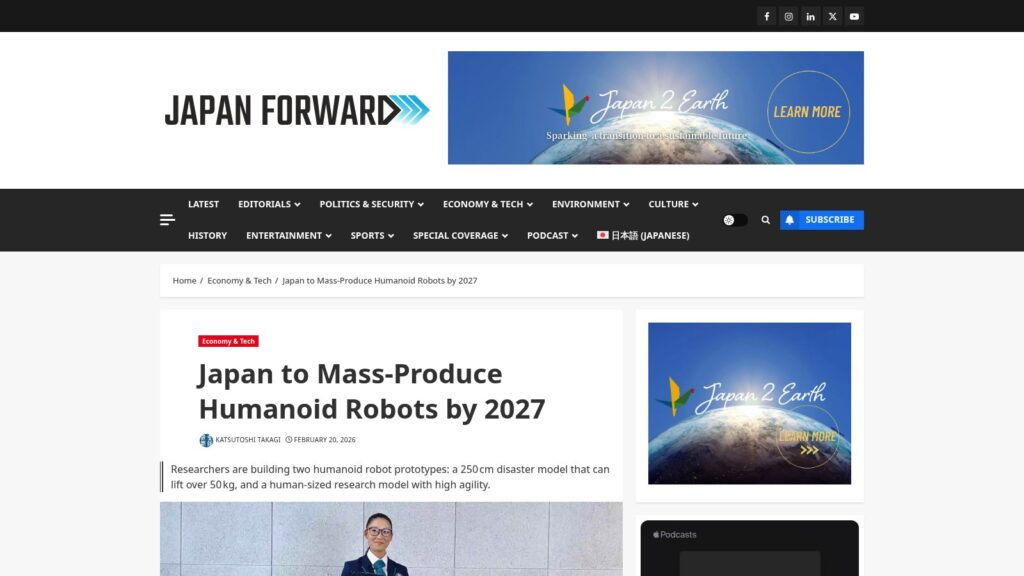
Japan to Mass-Produce Humanoid Robots by 2027

Japan plans to mass-produce humanoid robots by 2027 to address labor shortages. Two prototypes are under development: a 250 cm disaster response model and a human-sized research model. This effort involves collaboration among major Japanese companies and is part of a broader AI Robotics Strategy to enhance technological capabilities and workforce support, as Japan faces a declining working-age population. Despite challenges, the initiative aims to unify efforts in robotics as Japan seeks to regain its competitive edge in the field.

https://japan-forward.com/japan-to-mass-produce-humanoid-robots-by-2027/

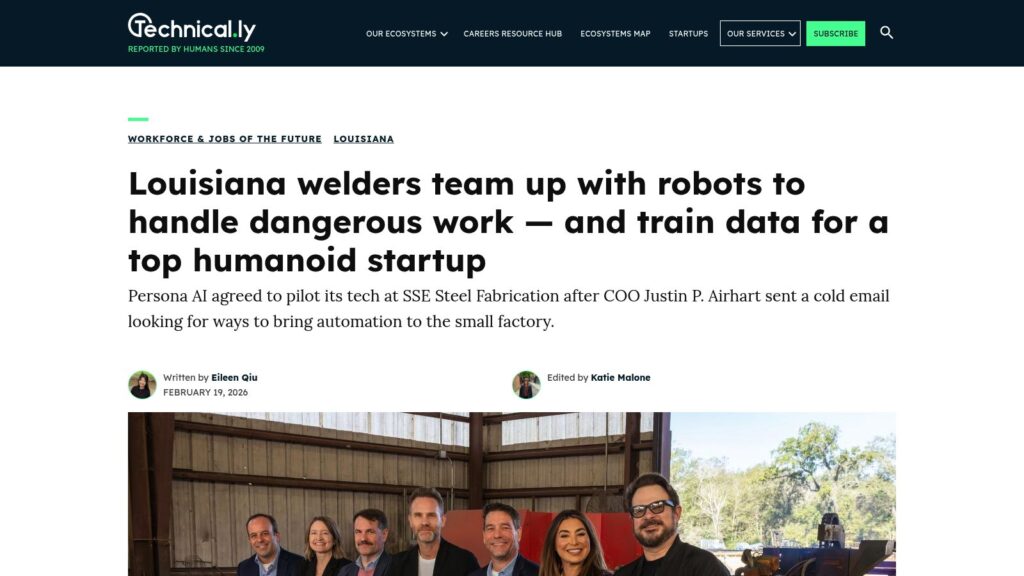
Louisiana Welders Team up With Robots to Handle Dangerous Work — and Train Data for a Top Humanoid Startup

Louisiana’s SSE Steel Fabrication partners with Persona AI to integrate humanoid welding robots in response to labor shortages, enhance worker training, and improve safety. The robots will assist with tasks like welding and data collection, while not replacing human workers. The 18-month collaboration aims to innovate manufacturing processes and support small businesses by making advanced technology accessible, with hopes of balancing human-robot collaboration in the workforce.

https://technical.ly/workforce/persona-ai-sse-steel-humanoid-robot-pilot/

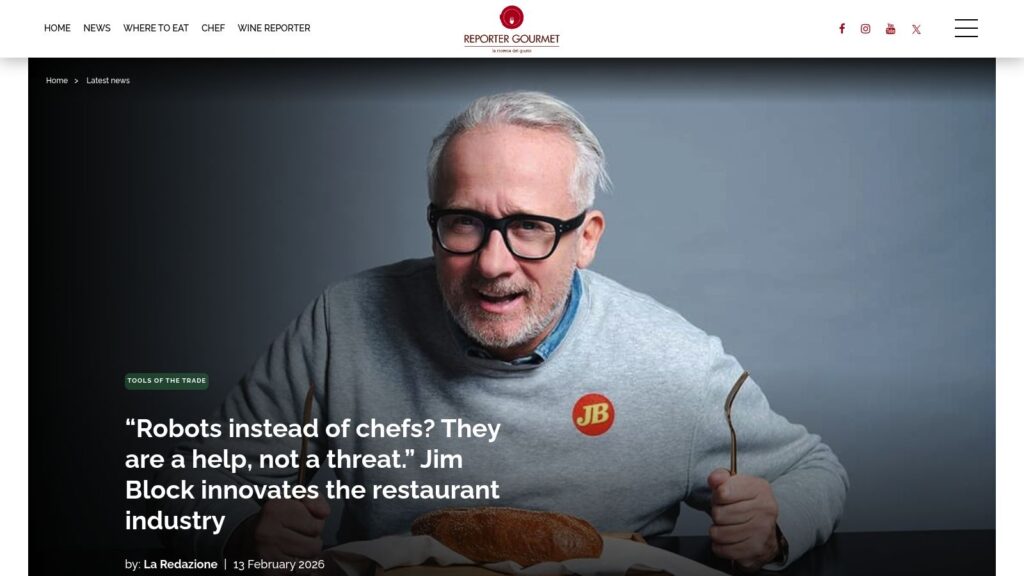
“Robots Instead of Chefs? Faster and More Precise: They Are an Aid to Business, Not a Threat.”

Jim Block’s CEO promotes automation in restaurants as a helpful ally, enhancing efficiency without losing human connection. Humanoid robots assist with repetitive tasks like frying and assembling food, allowing staff to focus on customer service. This collaboration aims for precision and speed while preserving the personal touch essential to hospitality. Thus, future quality fast food combines robotic efficiency with human warmth.

https://reportergourmet.com/en/news/9767-robots-instead-of-chefs-they-are-a-help-not-a-threat-jim-block-innovates-the-restaurant-industry

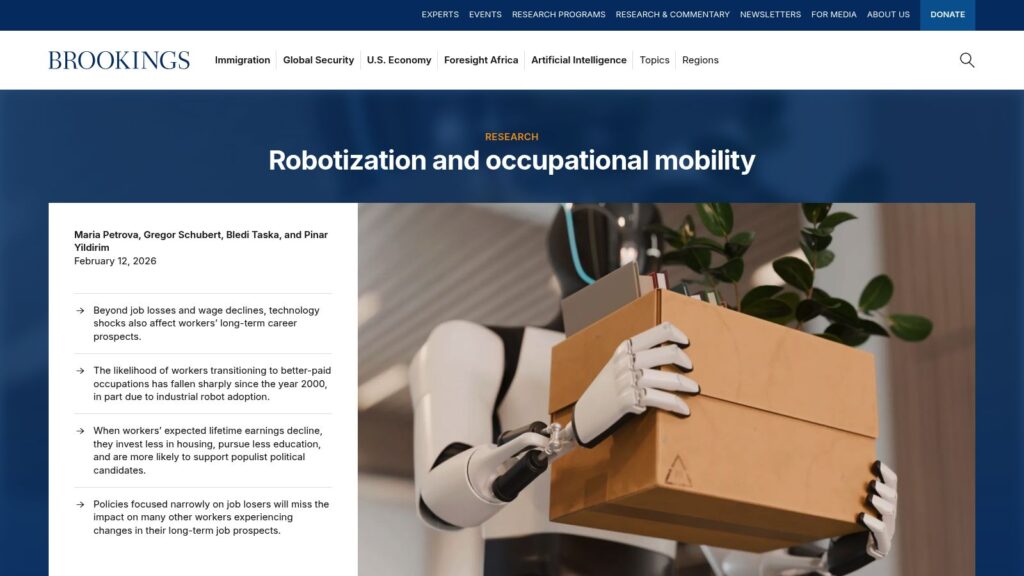
Robotization and Occupational Mobility

Robotization and AI affect workers’ long-term career trajectories beyond job losses and wage declines. Since 2000, fewer workers transition to higher-paying jobs due to automation, impacting earnings and reducing investments in housing and education. Policies should address the broader implications of technology, not just job displacement, as many workers face diminished career advancement opportunities, particularly in high-manufacturing areas affected by industrial robots. The study highlights the need for policies to consider the long-term career effects of automation on all workers, not just those directly displaced.

https://www.brookings.edu/articles/robotization-and-occupational-mobility/

China 企 Serious Workforce Shortage “Desperate to Introduce Robots”

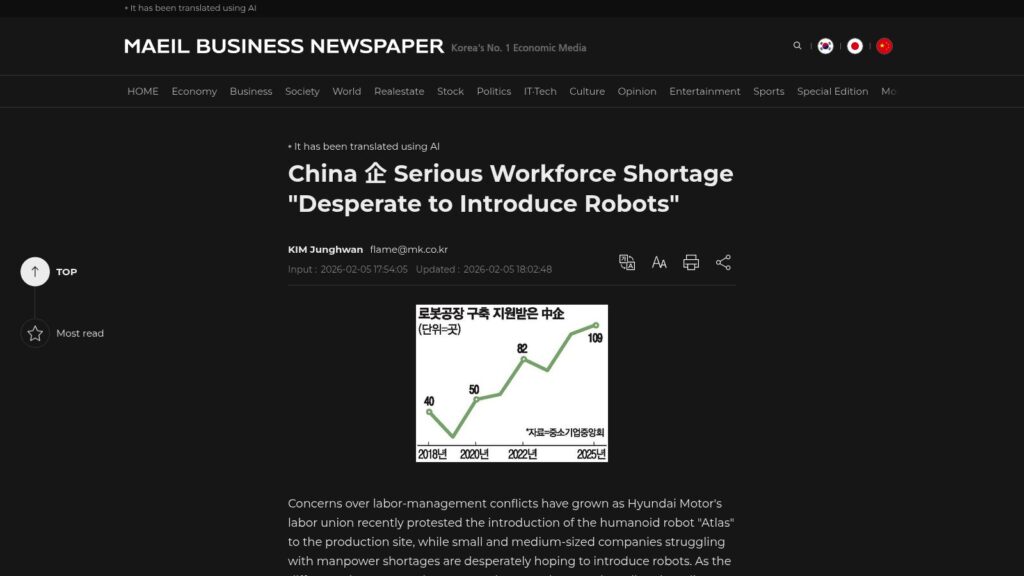
Hyundai Motor’s labor union opposes the introduction of the humanoid robot “Atlas,” fearing job loss, amid rising labor-management conflicts. Meanwhile, small and medium-sized enterprises (SMEs) are eager to adopt robots due to severe manpower shortages. A report indicates 109 SMEs received support for automation, tripling since 2018, resulting in increased productivity and employment. Dual labor market structures are exacerbating tensions, with high-cost labor in large corporations conflicting with robotic alternatives.

https://www.mk.co.kr/en/business/11954651

Innovation in Words Alone, Hindered Future

Hyundai’s Atlas robot represents industry innovation but faces labor conflict with unions fearing job loss. President Lee Jae Myung emphasizes adapting to the future amidst restrictive labor laws, creating tension between corporate needs and union demands. The ‘yellow envelope bill’ complicates this, potentially hampering competitiveness. Critics argue without substantial reform, Lee’s stance risks becoming mere rhetoric, hindering true progress. Urgent dialogue on the impact of automation on employment and meaningful labor reforms is essential to support innovation and avoid disputes.

https://www.chosun.com/english/opinion-en/2026/02/02/ZVRQN5N32BBOTC3XV65R6GAXZY/

Beyond the Robots: What CES 2026 Really Means for Digital Workplace Leaders

CES 2026 showcased AI’s transformative impact on frontline work and digital employee experiences (DEX). Key takeaways highlight AI’s role in improving operations, safety, and business outcomes, as seen in examples from Siemens and Google. AI is now central to digital experiences, facilitating personalized, adaptive workplaces, while wearables emerged as a powerful yet risky technology. Despite advancements, the practical implementation of these solutions varies, emphasizing the need for careful problem identification and a balanced approach to technology integration.

https://www.cdotrends.com/story/4879/beyond-robots-what-ces-2026-really-means-digital-workplace-leaders

3 Humanoid Robot Companies Shaping the Future of Automation

3 Humanoid Robot Companies to Watch:
1. Figure AI – Fast deployment of general-purpose robots for industrial work.
2. Tesla Optimus – Ambitious project aiming for mass-production humanoid robots.
3. Agility Robotics – Focused on practical warehouse applications with its robot, Digit.

Humanoid robots will initially assist in labor-intensive jobs, not replace them.

https://www.eweek.com/news/3-humanoid-robot-companies-automation/

Musk Admits No Optimus Robots Are Doing ‘useful Work’ at Tesla — After Claiming Otherwise

Elon Musk admitted in Tesla’s Q4 2025 earnings call that no Optimus robots are currently performing useful work in factories, contradicting previous claims about their operational status. Despite earlier promises of thousands of functional robots, Tesla is still in the R&D phase, with basic tasks being the only capabilities demonstrated. Musk attributes the lack of usefulness to ongoing development and expects production levels to rise by the end of 2026, highlighting a consistent pattern of unrealistic timelines and disappointing outcomes for Tesla’s Optimus program.

https://electrek.co/2026/01/28/musk-admits-no-optimus-robots-are-doing-useful-work-at-tesla-after-claiming-otherwise/

Scroll to Top