robotization

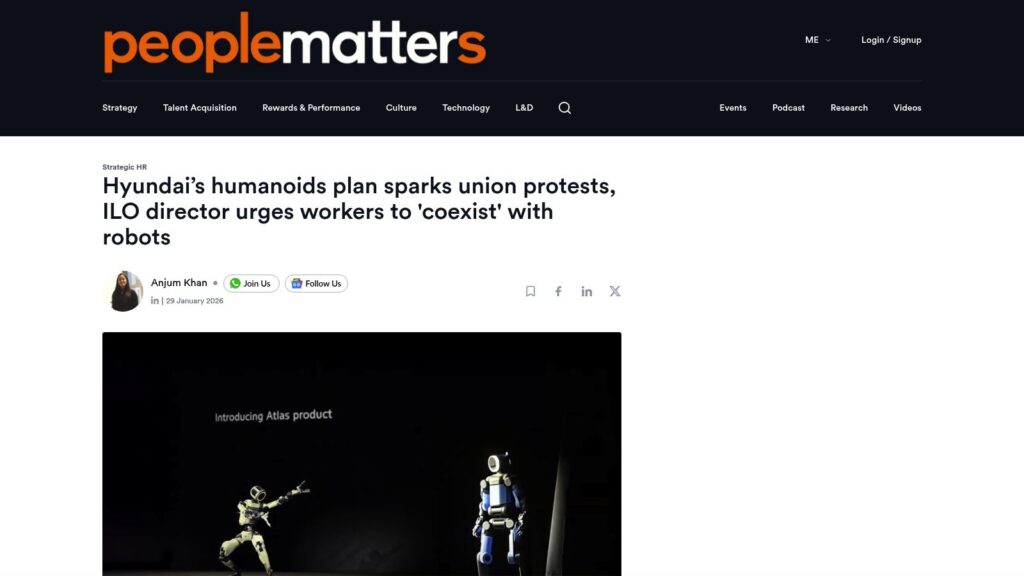
Hyundai’s Humanoids Plan Sparks Union Protests, ILO Director Urges Workers to ‘coexist’ With Robots

Hyundai faces labor union protests over its humanoid robot plans, accused of using them to cut costs and boost profits. ILO director urges workers to reskill and coexist with automation instead of resisting it. Despite union opposition and concerns about job security, Hyundai’s deployment of robots is seen as a path to operational improvements, with an emphasis on skilled worker roles in managing technology.

https://me.peoplemattersglobal.com/news/strategic-hr/hyundais-humanoids-plan-sparks-union-protests-ilo-director-urges-workers-to-coexist-with-robots-48209

Louisiana Partners With Persona AI For Humanoid Robotics Pilot

Louisiana has partnered with Persona AI to pilot humanoid robotics in heavy industry, specifically at SSE Steel’s fabrication facility. The initiative aims to gather data for humanoid systems working alongside skilled tradespeople, enhancing operational efficiency and safety. This collaboration is part of a broader effort to modernize the state’s industrial capabilities through innovative technologies, ultimately creating high-skill jobs and improving competitiveness in key sectors.

https://businessfacilities.com/louisiana-partners-with-persona-ai-for-humanoid-robotics-pilot/

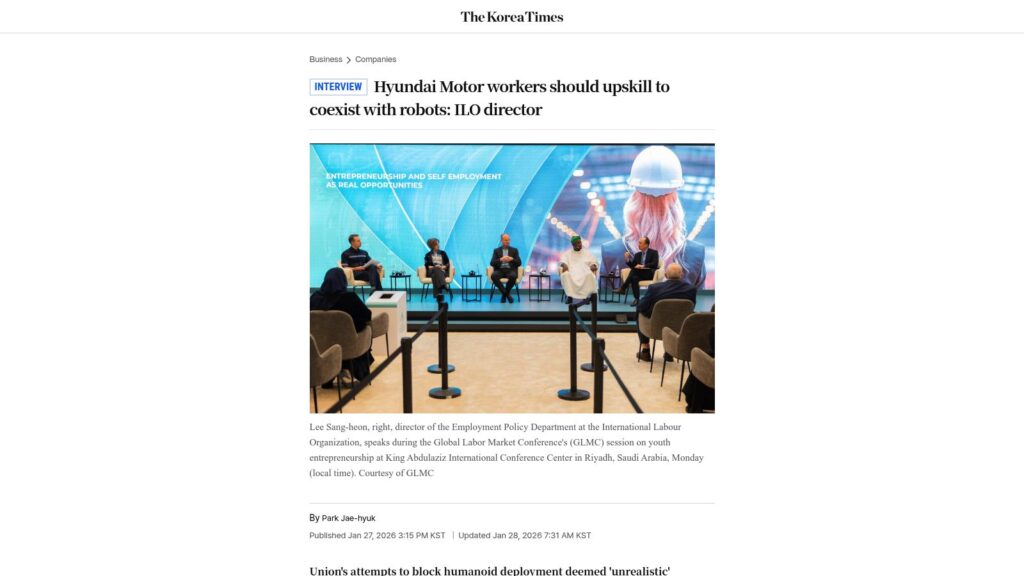
Hyundai Motor Workers Should Upskill to Coexist With Robots: ILO Director

ILO director advises Hyundai workers to upskill for coexistence with robots; union’s anti-robot stance deemed unrealistic. Emphasizes skilled workers needed to maintain robots despite fears of job loss. Calls for creating sustainable job cycles while supporting youth entrepreneurship.

https://www.koreatimes.co.kr/amp/business/companies/20260127/hyundai-motor-workers-should-adapt-to-coexist-with-robots-ilo-director

What Is a Humanoid Robot? Definition, Capabilities, and Industrial Reality

Humanoid robots mimic human structure and capabilities to work in human-designed environments. As labor shortages rise, manufacturers see them as a new automation solution. Key humanoid features include human-like form, high degrees of freedom for movement, and advanced AI for autonomy. Their role in industrial automation differs from traditional robots, focusing on unstructured settings. Current challenges include production costs and safety, emphasizing the need for practical applications and clear ROI in manufacturing. Future success depends on identifying specific tasks where humanoids excel, moving beyond mere demonstrations to validation of value.

https://www.automate.org/news/humanoid-robots-definition-capabilities-and-industrial-reality

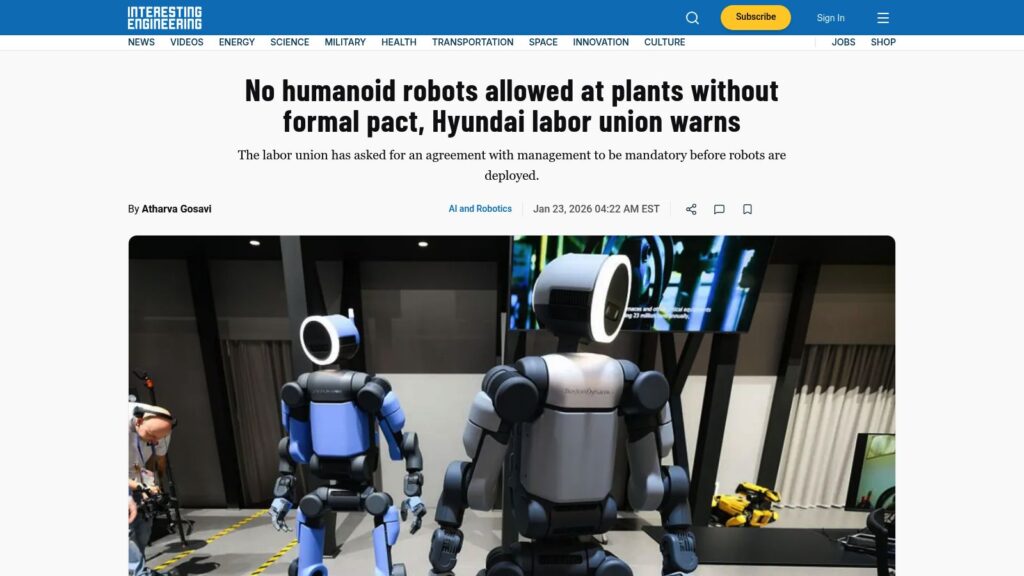
Hyundai Labor Union Warns Humanoids Could Trigger Major Job Losses

Hyundai’s labor union opposes deploying humanoid robots in factories without a formal agreement to ensure job security. The plan follows Hyundai’s intention to introduce Atlas robots and expand production capabilities by 2028, raising concerns about potential job losses and profit motives behind automation. The union demands management agreement before any robot deployment, emphasizing the threat of an “employment shock.”

https://interestingengineering.com/ai-robotics/hyundai-humanoids-not-allowed-without-agreement

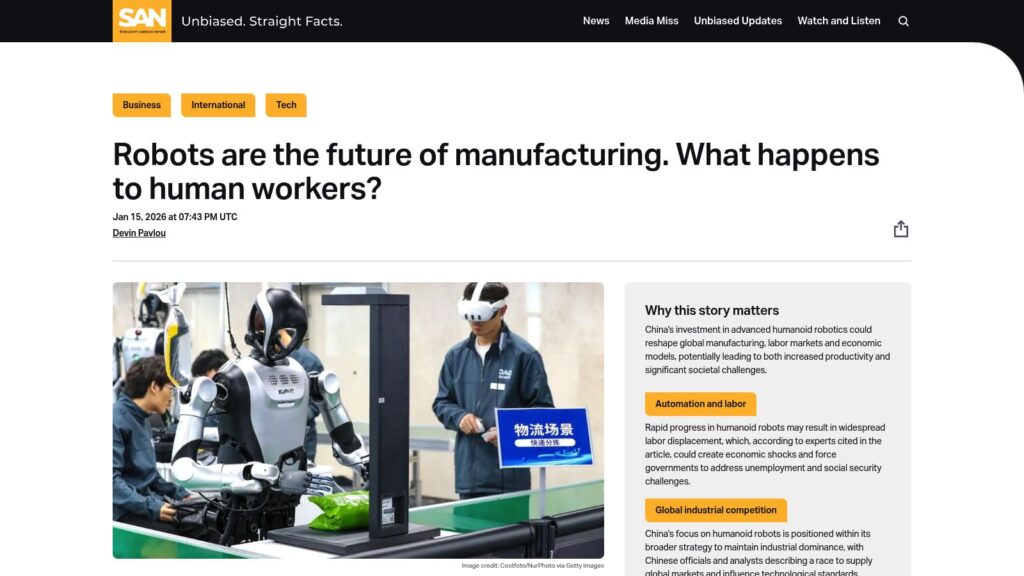
Robots Are the Future of Manufacturing. What Happens to Human Workers?

China invests heavily in humanoid robots for manufacturing, compensating for a declining workforce. This shift raises concerns over job displacement, global economic impact, and potential social security challenges. Automation may lead to mass unemployment and require new economic models, including universal basic income. As robots evolve, they could drastically reduce production costs and change labor dynamics.

https://san.com/cc/robots-are-the-future-of-manufacturing-what-happens-to-human-workers/

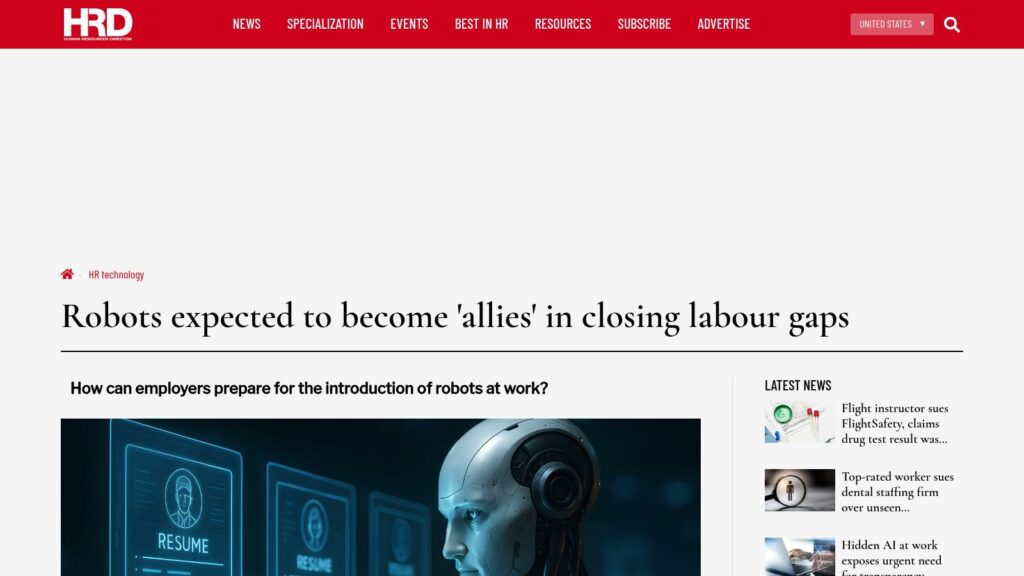
Robots Expected to Become ‘allies’ in Closing Labour Gaps

Robots are increasingly seen as allies in workplaces, aiding in closing labor gaps and enhancing efficiency, as per the International Federation of Robotics. This shift is prompted by heightened demands for skilled labor and the desire to alleviate employee workloads. The global market for industrial robots is soaring, reflecting widespread adoption. However, concerns persist regarding potential job displacement. Successful integration of robotics hinges on collaboration between employers and employees.

https://www.hcamag.com/us/specialization/hr-technology/robots-expected-to-become-allies-in-closing-labour-gaps/561837

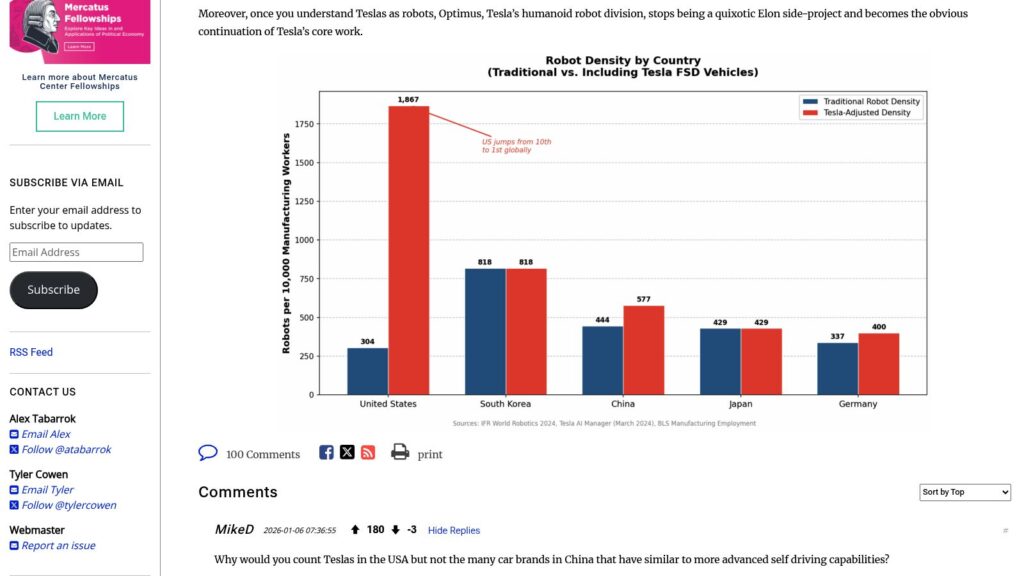
The US Leads the World in Robots (Once You Count Correctly)

US ranked low in robots per 10K manufacturing workers (304), lagging behind South Korea, China, Japan, and Germany. However, including Teslas with FSD capability elevates the US to the top, as these vehicles are highly sophisticated. This redefines Tesla’s humanoid robot division, Optimus, as a natural extension of its core technology.

https://marginalrevolution.com/marginalrevolution/2026/01/the-us-leads-the-world-in-robots-once-you-count-correctly.html?utm_source=rss

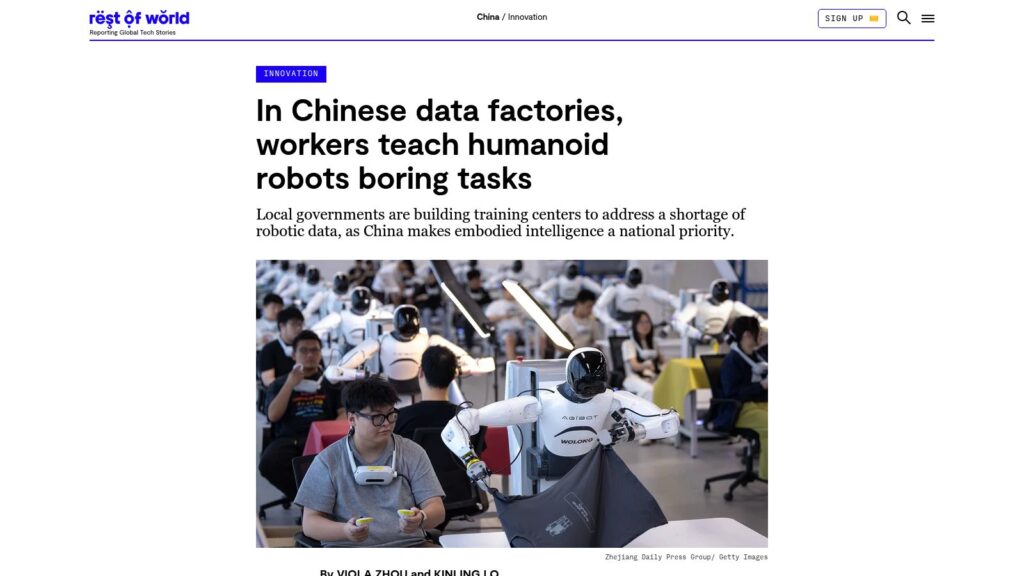
In Chinese Data Factories, Workers Teach Humanoid Robots Boring Tasks

China’s local governments are funding over 40 training centers to address a robotic data shortage, training humanoid robots through repetitive human actions like folding clothes. This initiative supports China’s push for advanced robotics, framed as essential for productivity and technological supremacy. The government emphasizes embodied intelligence, leading to a race among firms to develop humanoid robots. Challenges include costly data collection methods and concerns over potential industry overcapacity. Despite skepticism about training efficiency, the facilities aim to provide standardized data, aiding smaller firms and bolstering China’s competitive edge in robotics.

https://restofworld.org/2026/china-robots-training-centers-workers/

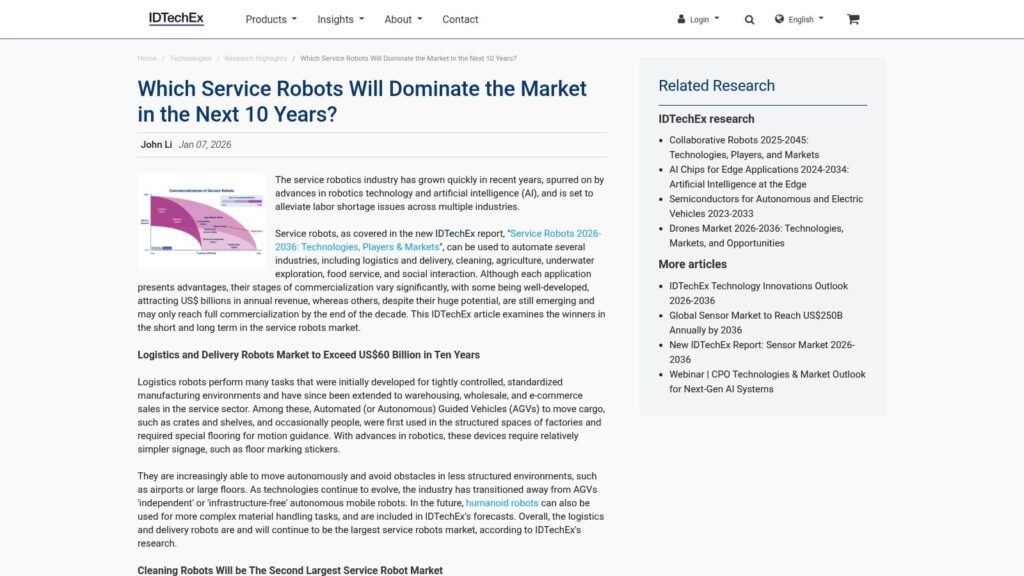
Which Service Robots Will Dominate the Market in the Next 10 Years?

The service robotics industry is rapidly growing, with logistics and delivery robots projected to dominate the market, reaching over $60 billion by the next decade. Cleaning robots are expected to be the second largest market, surpassing $20 billion by 2036. While kitchen robots are currently a smaller market, they are forecasted to grow significantly over the next ten years.

https://www.idtechex.com/en/research-article/which-service-robots-will-dominate-the-market-in-the-next-10-years/34229

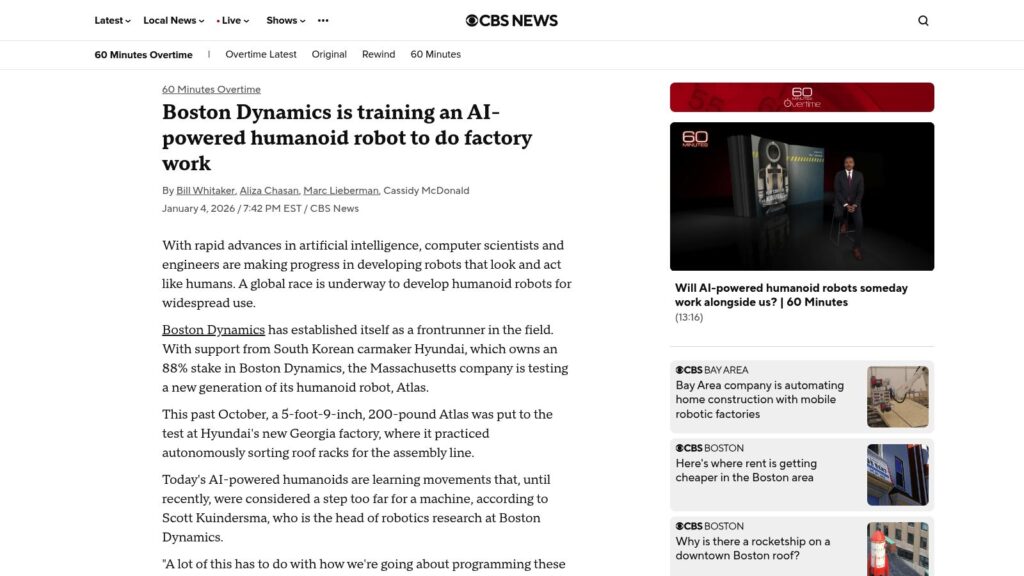
Boston Dynamics Is Training an AI-powered Humanoid Robot to Do Factory Work

Boston Dynamics is advancing AI-powered humanoid robots, notably its Atlas model, to perform factory tasks, demonstrating significant progress in robotics. The company employs innovative training techniques like demonstration and machine learning, enabling Atlas to execute complex movements. Although Atlas can perform some tasks autonomously, routine jobs remain challenging. The humanoid robotics market is projected to grow significantly, with Boston Dynamics leading, amidst competition from global firms, particularly in China. Concerns over job displacement exist, though officials indicate these robots are not yet autonomous enough to fully replace humans.

https://www.cbsnews.com/news/boston-dynamics-training-ai-humanoids-to-perform-human-jobs-60-minutes/

Know the Top 10 Applications of Robotics in 2026

Robotics is rapidly advancing, influencing many industries by 2026. Key applications include:

  1. Manufacturing: Smart factories with collaborative robots enhance productivity.
  2. Healthcare: Precision robots improve surgical outcomes and patient care.
  3. Logistics: Automation boosts efficiency in warehousing and supply chains.
  4. Agriculture: Robotics enhances crop management and yields.
  5. Retail: AI-powered robots improve customer service and inventory management.
  6. Construction: Robotics facilitates safety and efficiency in building tasks.
  7. Defense: Intelligent robots assist in surveillance and safety.
  8. Space Exploration: Robots perform complex tasks with minimal human input.
  9. Education: Robotics integration aids STEM learning.
  10. Home Automation: Smart robots assist with daily tasks and enhance living quality.

Overall, robotics will reshape work, enhance productivity, and drive economic growth while promoting collaborative human-robot interaction.

https://www.jaroeducation.com/blog/applications-of-robotics

Tokyo Venture Allows Housebound People to ‘work While Teleporting’

Tokyo’s Dawn Avatar Robot Cafe, created by Ory Yoshifuji, allows housebound individuals to operate robots for tours and service, promoting social engagement and employment. Initially a reaction to his own isolation, the venture now employs over 100 “pilots,” enabling disabled participants to feel more connected and productive. The cafe has expanded into tourism, offering personalized tours, while facing challenges like internet connectivity in crowded areas. Ory aims for broader implementation of this model to combat loneliness and enhance inclusion through technology.

https://www.abc.net.au/news/2025-12-31/tokyo-robot-tourism-business-cafe-housebound-workers/106177054

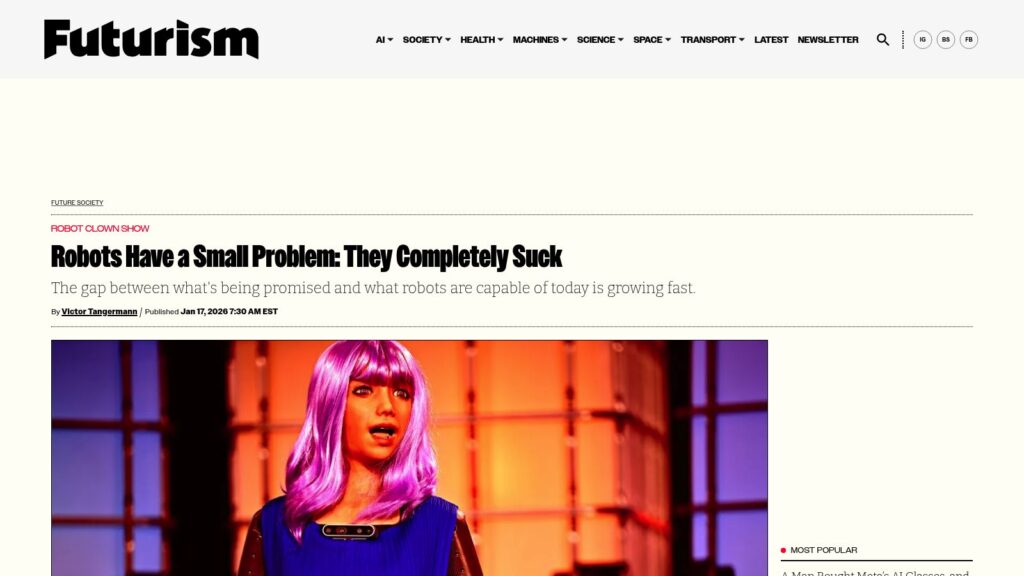
Something Is Making Humanoid Robot Makers Worry: The Robots Suck

Humanoid robot makers are concerned their products are underselling technological capabilities, resembling overpriced junk. Executives warn of potential customer dissatisfaction and e-waste if poorly conceived robots are released. Comparisons are made to the Apple Newton, suggesting current humanoids could face similar failures if utility isn’t improved. Buyers are advised against investing in these robots, as they currently lack practical applications.

https://gizmodo.com/something-is-making-humanoid-robot-makers-worry-the-robots-suck-2000703811

Scroll to Top