work

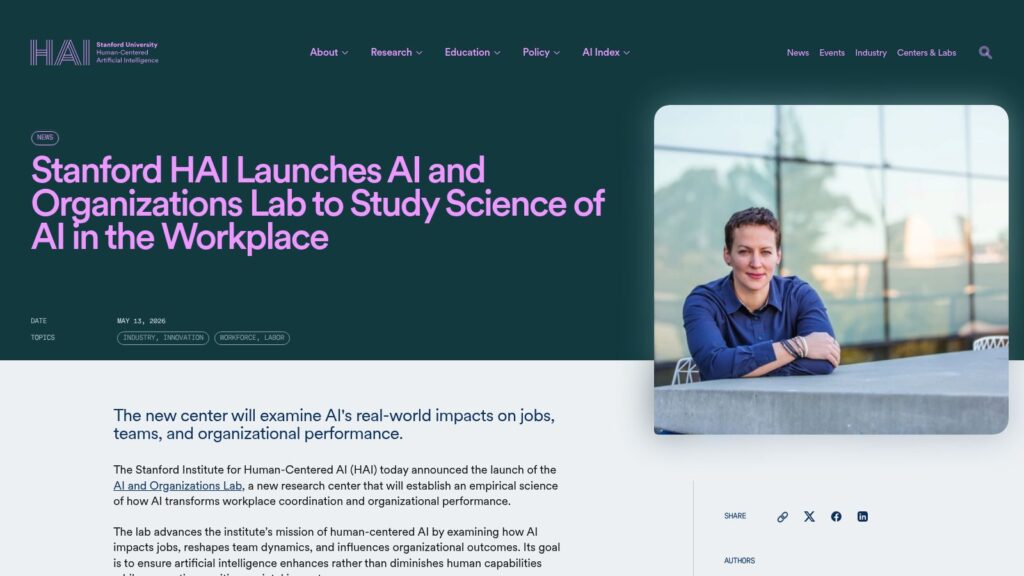
Stanford HAI Launches AI and Organizations Lab to Study Science of AI in the Workplace

Stanford’s Institute for Human-Centered AI (HAI) has launched the AI and Organizations Lab to conduct empirical research on how AI transforms workplace coordination, team dynamics, and organizational performance. Led by Melissa Valentine and other faculty, the lab aims to develop evidence-based insights that help organizations implement AI in ways that enhance human capabilities and generate positive societal impacts.

https://hai.stanford.edu/news/stanford-hai-launches-ai-and-organizations-lab-to-study-science-of-ai-in-the-workplace

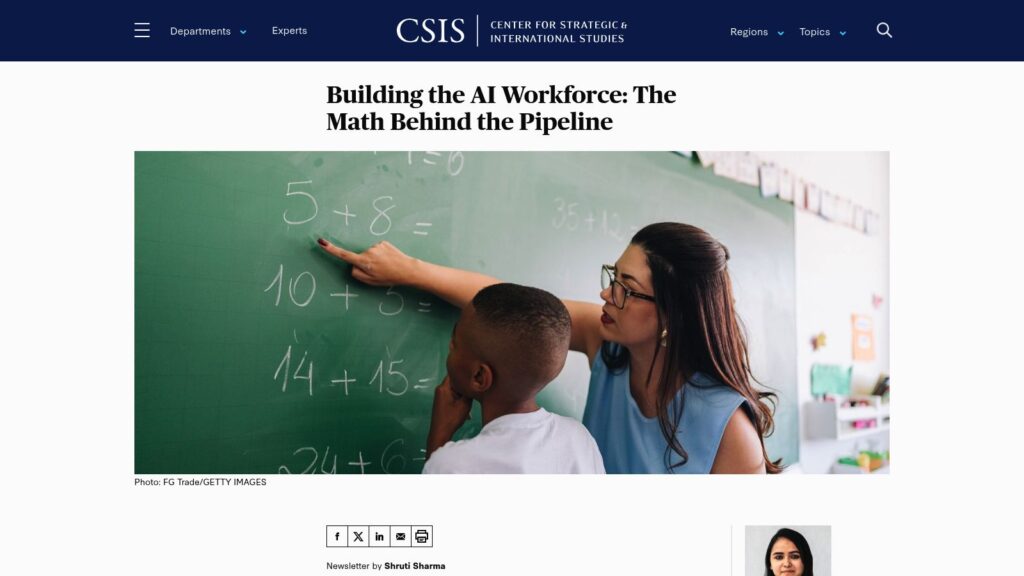
Building the AI Workforce: The Math Behind the Pipeline

The article discusses how artificial intelligence (AI) is transforming work by automating routine tasks and increasing the importance of mathematical skills for both developing and effectively using AI systems. It highlights a concerning decline in math achievement among students in the U.S., which threatens the talent pipeline necessary to innovate and employ AI technologies broadly, emphasizing that strengthening math education is critical to maintaining competitive advantage and maximizing productivity gains in an AI-driven economy.

https://www.csis.org/analysis/building-ai-workforce-math-behind-pipeline

Appearing Productive in The Workplace

The article discusses how generative AI in the workplace allows novices to produce work that appears expert without the necessary understanding, leading to significant risks when people impersonate expertise outside their training. It highlights the decoupling of output quality from actual competence, resulting in flawed work accepted due to management’s eagerness for apparent productivity, and warns that the lack of human judgment in reviewing AI-generated work undermines quality control and professional development.

https://nooneshappy.com/article/appearing-productive-in-the-workplace/

How AI Is Reshaping the Future of Work

Artificial intelligence is fundamentally transforming work by enhancing daily workflows, decision-making, and organizational structures, but the impact depends heavily on leadership that integrates AI responsibly with clear governance and ethical oversight. Stanford Graduate School of Business Executive Education programs prepare leaders to navigate these changes by focusing on AI-enabled organizational design, human-AI collaboration, reskilling, and balancing automation with human judgment to build adaptable, ethical, and high-performing organizations.

https://www.gsb.stanford.edu/exec-ed/difference/how-ai-reshaping-future-work

On Capitol Hill, a Debate Over Who AI at Work Is Really Working For

A recent Congressional hearing by the House Education and Workforce Subcommittee debated AI’s impact on workers and employers, focusing on federal versus state regulation of AI in the workplace. Employer representatives advocated for a federal framework to reduce conflicting state laws, while worker advocates warned against federal preemption, highlighting risks like increased surveillance and data privacy concerns. Witnesses emphasized AI’s potential to aid compliance and governance but also called for transparency, accountability, and better data to guide policy development.

https://hrexecutive.com/on-capitol-hill-a-debate-over-who-ai-at-work-is-really-working-for/

AI and the Workforce: Impacts on Jobs, Workers, and Employers

Since the widespread introduction of AI-powered chatbots like ChatGPT, the impacts of AI on jobs, workers, and employers remain debated, with no evidence yet of broad job losses but notable shifts in task automation and skills demands. AI tends to affect specific tasks rather than entire jobs, with industries like computer, legal, and office support more exposed, while entry-level roles may experience more disruption; meanwhile, demand for AI literacy and non-technical skills like creativity is rising, and new AI-related jobs emphasizing uniquely human skills are emerging.

https://bipartisanpolicy.org/issue-brief/ai-and-the-workforce-impacts-on-jobs-workers-and-employers/

Made in Houston: Building the Workforce and Infrastructure for Manufacturing’s Future

Houston manufacturers face challenges including labor shortages, tariff uncertainties, and energy reliability but are positioning for growth through workforce development and infrastructure investment. Industry leaders, educators, and financial experts highlighted the importance of upskilling workers in advanced technologies, fostering partnerships with educational institutions like Houston City College, and adopting automation to address labor gaps while ensuring energy stability amidst Texas grid constraints.

https://www.bizjournals.com/houston/news/2026/04/12/workforce-infrastructure-manufacturing-future.html

Twin to Win: The Rise of Digital Doppelgangers – HR Magazine

Digital doppelgangers—AI-powered digital replicas of employees—are emerging as a significant future-of-work trend, with organisations exploring their use for knowledge retention, productivity, and mentoring. Examples include Peterborough City Council’s chatbot based on a long-serving employee and UBS’s AI analyst avatars, illustrating both the potential benefits and challenges, such as data protection, ethical concerns, and the need for human oversight. While the technology advances rapidly, HR leaders must carefully address legal, ethical, and employee relations issues as digital twins become more common in the workplace.

https://www.hrmagazine.co.uk/content/features/twin-to-win-the-rise-of-digital-doppelgangers

Research Finds That AI Has Already Replaced Work for 20 Percent of Jobs

A recent survey by Epoch AI and Ipsos found that 20 percent of full-time American workers report AI has already replaced parts of their jobs, suggesting AI-driven job displacement is occurring faster than augmentation. Experts warn the policy window to manage AI’s impact on the labor market may be closing quickly, although doubts remain about AI’s actual productivity and long-term effects on employment.

https://futurism.com/artificial-intelligence/ai-automation-replacement

AI Is Driving Rapid Workplace Changes, but Uneven Benefits

The Microsoft Research blog’s “New Future of Work” report highlights that generative AI is rapidly transforming workplaces by reshaping collaboration, decision-making, and learning rather than merely speeding tasks. While AI adoption is uneven across sectors and regions, it is prompting shifts in job roles, skills, and team dynamics, with human expertise becoming more critical as people transition to guiding and refining AI outputs. The report emphasizes that the future of work depends on collective choices to harness AI as a collaborative partner and to ensure benefits are broadly shared.

https://www.microsoft.com/en-us/research/blog/new-future-of-work-ai-is-driving-rapid-change-uneven-benefits/

How to Guess If Your Job Will Exist in Five Years

In the face of AI advancements, many white-collar workers worry about job obsolescence, but the article suggests a useful analogy: are workers “coal” (replaceable by technology) or “horses” (adaptable and enduring)? Drawing on the historical example of horses replaced by tractors in agriculture and the Jevons paradox—which shows that efficiency can increase overall demand—the author argues that while some jobs may disappear, many roles will evolve or be complemented by AI, highlighting the complex, uneven impact of technology on employment.

https://www.theatlantic.com/ideas/2026/03/ai-job-loss-jevons-paradox/686520/?gift=j9r7avb6p-KY8zdjhsiSZxEaMJJtr_JVWzViUlGY2MY

Forget White-Collar Jobs. AI Is Also Displacing Workers Without College Degrees

A Brookings Institution report highlights that AI is not only displacing white-collar, college-educated workers but also significantly impacting workers without college degrees by disrupting key career pathways. Over 15 million non-college workers hold jobs highly exposed to AI, particularly in clerical and administrative Gateway roles, which serve as crucial stepping stones to better-paying Destination jobs, raising concerns about social mobility and labor market dynamics.

https://www.fastcompany.com/91522437/forget-white-collar-jobs-ai-is-also-displacing-workers-without-college-degrees

Can a Robot Really Do Your Job?

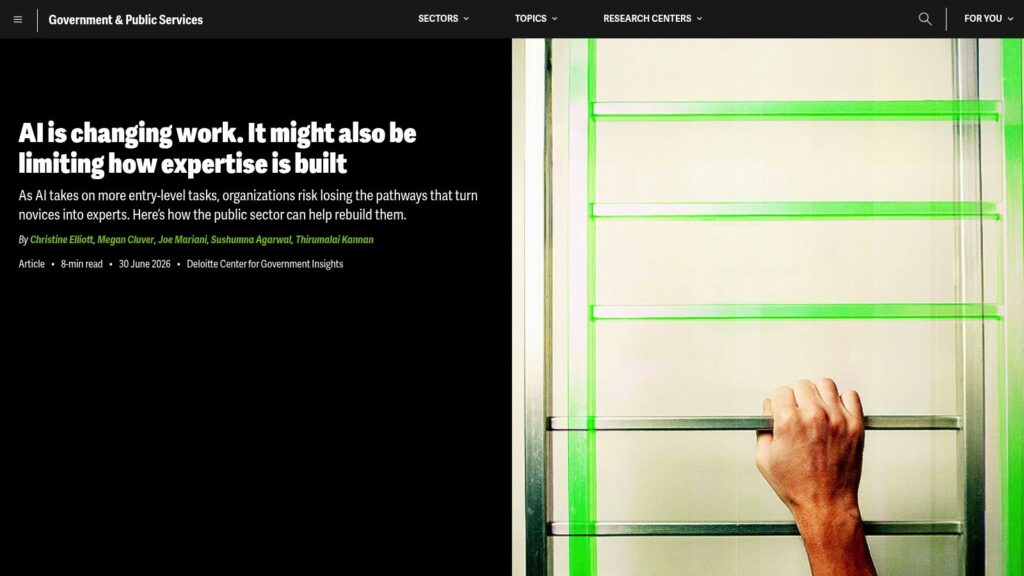
A recent report highlights a growing talent crisis in the insurance industry, with a shrinking young workforce and declining graduate interest, while suggesting AI may help but is unlikely to fully replace experienced professionals soon. The study emphasizes that AI is more capable of automating entry-level and administrative tasks, potentially threatening the traditional training pipeline for future experts, but roles requiring judgment, relationships, and expertise are expected to remain resilient. Overall, the industry’s key challenge lies in addressing this demographic shift and talent shortage, with AI playing a secondary role.

https://www.insurancebusinessmag.com/uk/news/breaking-news/can-a-robot-really-do-your-job-570868.aspx

Using AI Can Add Extra Labor and Cause ‘Brain Fry’ for Workers, Experts Say: It’s Not a ‘Magic Bullet’

While AI is intended to improve workplace efficiency, many employees experience additional labor and mental fatigue, sometimes called “brain fry,” from managing and correcting AI-generated work. Experts note that AI is not a “magic bullet,” as it requires significant human oversight, learning time often outside of work hours, and can increase workload depth and cognitive strain, highlighting a need for employers to thoughtfully integrate AI to ensure sustainable productivity and employee well-being.

https://www.cnbc.com/2026/04/06/companies-are-pushing-ai-but-experts-say-it-can-add-extra-labor-cause-brain-fry.html

Scroll to Top