business

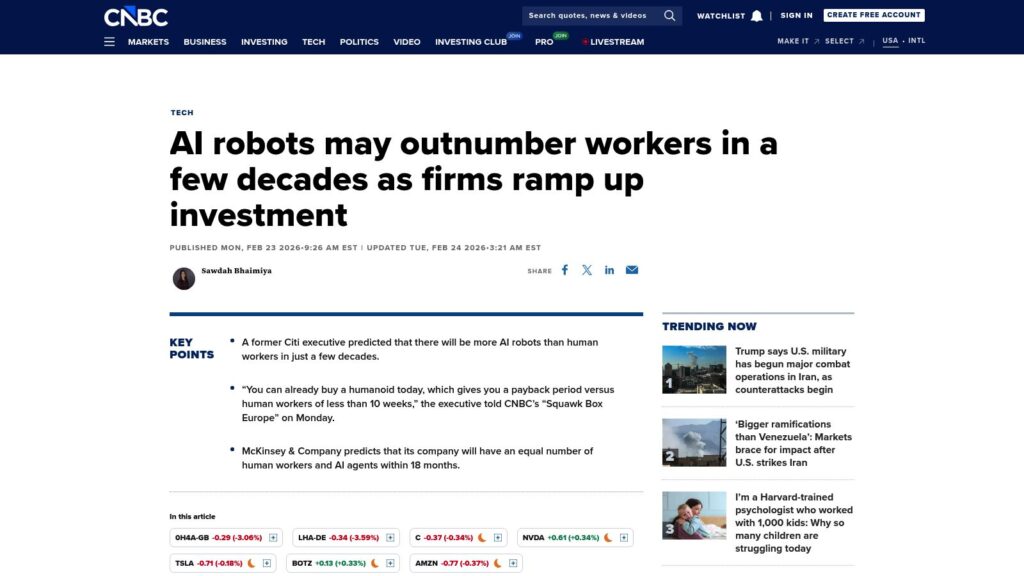
Louisiana Welders Team up With Robots to Handle Dangerous Work — and Train Data for a Top Humanoid Startup

Louisiana’s SSE Steel Fabrication partners with Persona AI to integrate humanoid welding robots in response to labor shortages, enhance worker training, and improve safety. The robots will assist with tasks like welding and data collection, while not replacing human workers. The 18-month collaboration aims to innovate manufacturing processes and support small businesses by making advanced technology accessible, with hopes of balancing human-robot collaboration in the workforce.

https://technical.ly/workforce/persona-ai-sse-steel-humanoid-robot-pilot/

KPMG 2026 Perspectives: Local Insights From Boston

KPMG’s 2026 report on Boston businesses shows a strategic shift towards AI adoption and workforce upskilling amidst economic uncertainty. Leaders emphasize efficiency, with 98% providing AI training and 91% focusing on internal upskilling to reduce hiring needs. Confidence in growth remains high (up to 94%), but there are concerns over integration of AI, cybersecurity, and market conditions. While hiring and expansion plans have slightly decreased, 93% intend to increase AI use, expecting transformative impacts on operations. Additionally, Boston’s talent quality and educational resources are seen as competitive advantages, with a substantial number aiming for acquisitions in 2026 despite tariff impacts affecting sales.

https://kpmg.com/us/en/media/news/boston-perspectives.html

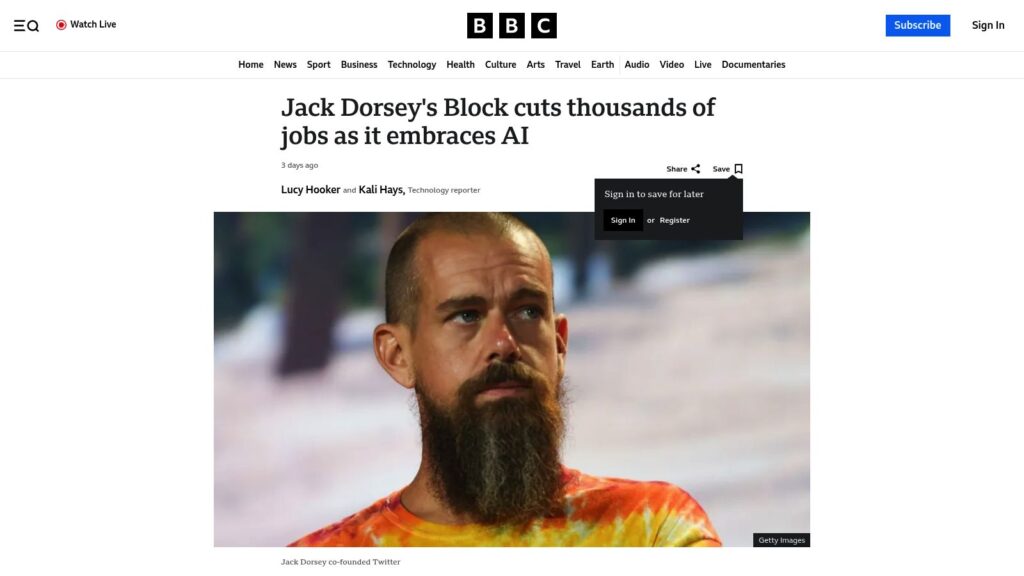
Andrew Yang Says AI Will Wipe Out Millions of White-collar Jobs in the Next 12 to 18 Months

Andrew Yang warns AI will cause mass layoffs of white-collar jobs in 12-18 months, affecting mainly desk jobs like managers and marketers. Yang believes companies will competitively cut staff to please the stock market. The layoffs could impact local businesses serving affected workers. January saw record layoffs, with some companies citing AI as a reason.

https://www.businessinsider.com/andrew-yang-mass-layoffs-ai-closer-than-people-think-2026-2

Why More Companies Are Recognizing the Benefits of Keeping Older Employees

Companies are recognizing the benefits of older workers, shown by successful experiments at B&Q and BMW that increased productivity and reduced turnover. Despite aging populations and the need for experienced talent, many organizations still push older employees out prematurely. Studies show that firms with older workers perform better due to their judgment and experience, countering the “albatross theory” that views them as liabilities. As life expectancy increases and workforce demographics shift, companies should adapt strategies to retain older employees and serve an aging customer base. Investors are starting to see the financial importance of this shift, and businesses must design careers that leverage the value of older workers to maintain competitiveness.

https://longevity.stanford.edu/why-more-companies-are-recognizing-the-benefits-of-keeping-older-employees/

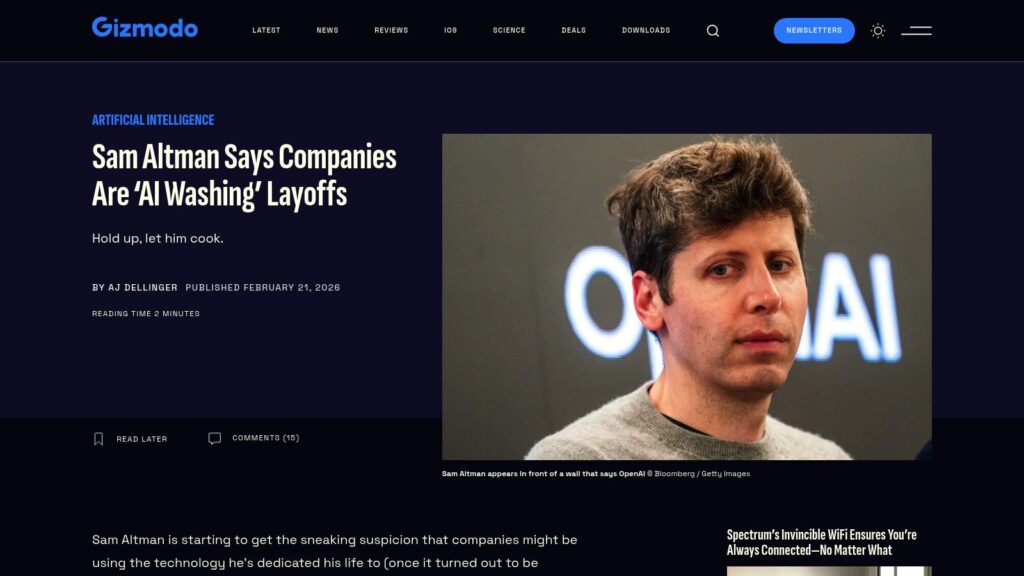
AI Hasn’t Changed Everything: Workforce Changes Still Follow The Money

Workforce changes are driven more by revenue than AI. Despite perceptions, companies cut jobs mainly due to financial performance (71% cite revenue changes) rather than AI (31%). Staff levels fluctuate with sales, indicating economic factors dictate hiring strategies. As revenue fluctuates, organizations adjust staffing and workspace needs, emphasizing the importance of aligning business decisions with actual demand rather than technology trends.

https://allwork.space/2026/02/ai-hasnt-changed-everything-workforce-changes-still-follow-the-money/

Why the Impact of AI Is Being Underestimated, and How It Will Transform Business Productivity

AI’s impact on business is underappreciated; it boosts productivity and creates new roles despite fears of job loss. Younger employees are crucial in adopting AI, enhancing workplace collaboration. Historical patterns show that those who embrace change early reap the most rewards. AI is transformative, reshaping how work is done, and those who take initiative in learning AI skills will lead in the evolving job market. The velocity of business is accelerating, urging a proactive approach to career development.

https://www.hrleader.com.au/tech/27821-why-the-impact-of-ai-is-being-underestimated-and-how-it-will-transform-business-productivity

Why I’m Not Worried About AI Job Loss

AI won’t cause mass job loss; current fears are exaggerated. While AI is advancing rapidly, substitution of human labor is complex, as comparative advantages matter. Human bottlenecks persist, leading to ongoing complementarity with AI, especially as demand for human-produced goods remains elastic. Transition will be smoother than many expect, with opportunities for new job creation despite some displacement. Ordinary workers should adapt without excessive worry; a backlash against AI might emerge due to fear, not necessity.

https://davidoks.blog/p/why-im-not-worried-about-ai-job-loss

About That Matt Shumer Post That Has Nearly 50 Million Views

Gary Marcus critiques Matt Shumer’s viral blog post with nearly 50 million views, calling it hype with misleading claims about AI’s coding capabilities. He argues that Shumer’s assertions lack data and ignore issues like error rates and user experiences. Marcus highlights five points of concern, including potential user burnout and security risks of AI-generated code, while cautioning against overconfidence in AI’s reliability. He concludes that despite some improvements, Shumer’s perspective is overly optimistic and unrealistic.

https://garymarcus.substack.com/p/about-that-matt-shumer-post-that

How Data and AI Are Reshaping Every Career

AI reshapes careers through “job churn,” where roles evolve due to task automation, augmentation, and redesign. As industries transform, workers face new expectations around data and technology, making skills adaptation essential. Approximately 40% of global employment is exposed to AI, with 78 million new jobs expected by 2030 amidst significant displacement. Key impacts include changing responsibilities across sectors such as finance, retail, and marketing, emphasizing the need for continuous skill development to maintain job relevance.

https://www.snowflake.com/en/blog/how-data-ai-reshaping-careers/

Something Big Is Happening

AI is rapidly advancing, transforming how work is done. Major breakthroughs, such as model GPT-5.3, have made AI increasingly competent in tasks that once needed human expertise. Many tech workers already feel AI’s impact, observing that it can outperform them in coding and other areas. This shift is not gradual; it’s accelerating, with predictions that AI can replace up to 50% of entry-level white-collar jobs within 1-5 years. The implications are vast, affecting fields like law, finance, writing, and customer service, as AI develops decision-making capabilities similar to human judgment. To adapt to these changes, individuals should actively engage with AI tools, understanding their potential and leveraging them to enhance productivity. Continuous learning and an openness to change are critical to thrive in this evolving landscape. The next few years will be crucial for those willing to embrace AI as it reshapes various industries.

https://shumer.dev/something-big-is-happening

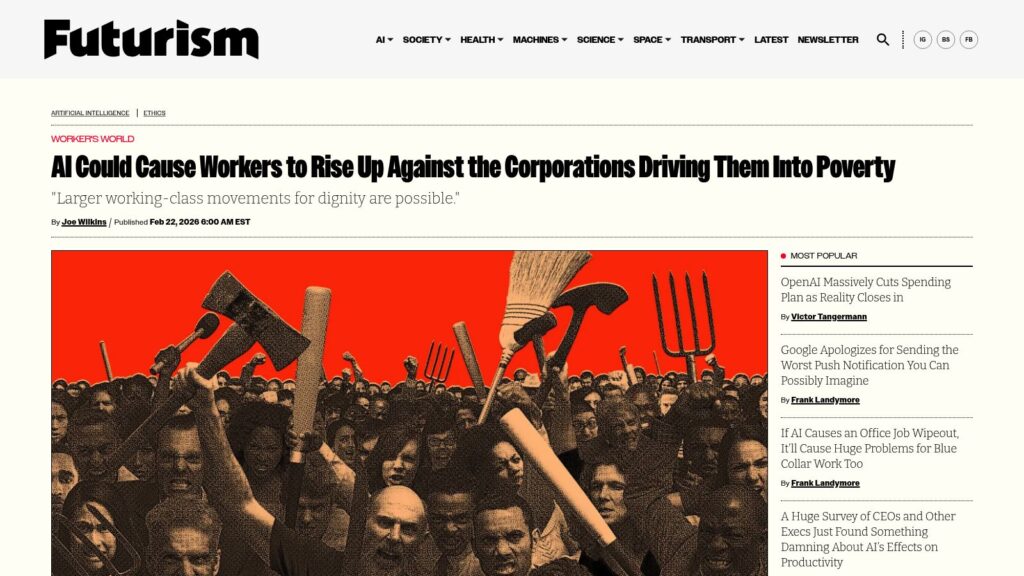
America Isn’t Ready for What AI Will Do to Jobs

AI is reshaping jobs, with uncertainty about its impact—potentially leading to massive layoffs, especially in white-collar roles. Economists debate whether job losses will be offset by new roles, but many express concern about rapid AI adoption’s implications. Historical precedents suggest tech changes often result in disruption before long-term adaptations occur. Some experts, wary of a rapid transition, call for proactive policy measures to mitigate unemployment risks. While AI offers productivity gains, its swift integration into existing systems poses challenges, creating a complex picture for the future labor market.

https://www.theatlantic.com/magazine/2026/03/ai-economy-labor-market-transformation/685731/

Why CEOs’ AI Hype Isn’t Landing With Employees

CEOs struggle to communicate AI benefits amid employee skepticism and unclear implementation, hindering productivity gains. Despite high investments, a study shows 95% of businesses see no AI return, with communication gaps and fears of job loss fueling resistance. Executives are urged to build trust and focus on AI training to bridge the divide, as poor messaging risks backlash in political spheres.

https://www.axios.com/2026/02/05/ai-adoption-messaging-gap

Beyond the Robots: What CES 2026 Really Means for Digital Workplace Leaders

CES 2026 showcased AI’s transformative impact on frontline work and digital employee experiences (DEX). Key takeaways highlight AI’s role in improving operations, safety, and business outcomes, as seen in examples from Siemens and Google. AI is now central to digital experiences, facilitating personalized, adaptive workplaces, while wearables emerged as a powerful yet risky technology. Despite advancements, the practical implementation of these solutions varies, emphasizing the need for careful problem identification and a balanced approach to technology integration.

https://www.cdotrends.com/story/4879/beyond-robots-what-ces-2026-really-means-digital-workplace-leaders

Scroll to Top