business

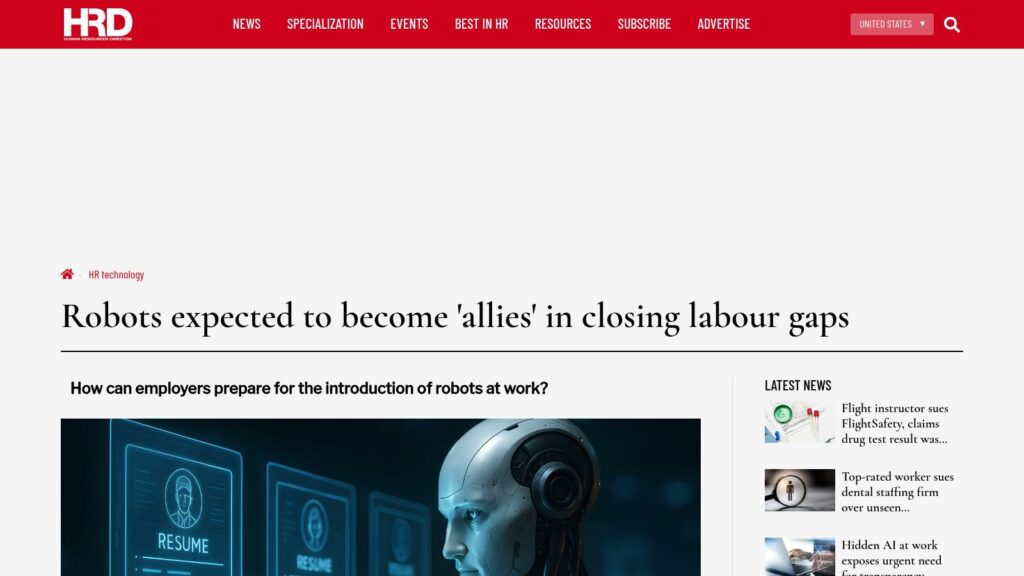
Robots Expected to Become ‘allies’ in Closing Labour Gaps

Robots are increasingly seen as allies in workplaces, aiding in closing labor gaps and enhancing efficiency, as per the International Federation of Robotics. This shift is prompted by heightened demands for skilled labor and the desire to alleviate employee workloads. The global market for industrial robots is soaring, reflecting widespread adoption. However, concerns persist regarding potential job displacement. Successful integration of robotics hinges on collaboration between employers and employees.

https://www.hcamag.com/us/specialization/hr-technology/robots-expected-to-become-allies-in-closing-labour-gaps/561837

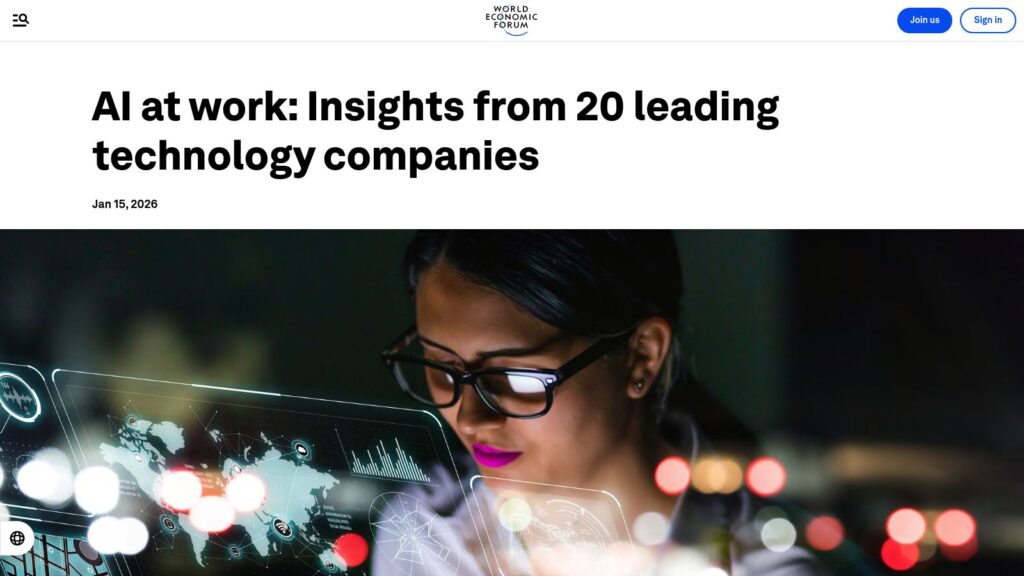
AI at Work: Insights From 20 Leading Technology Companies

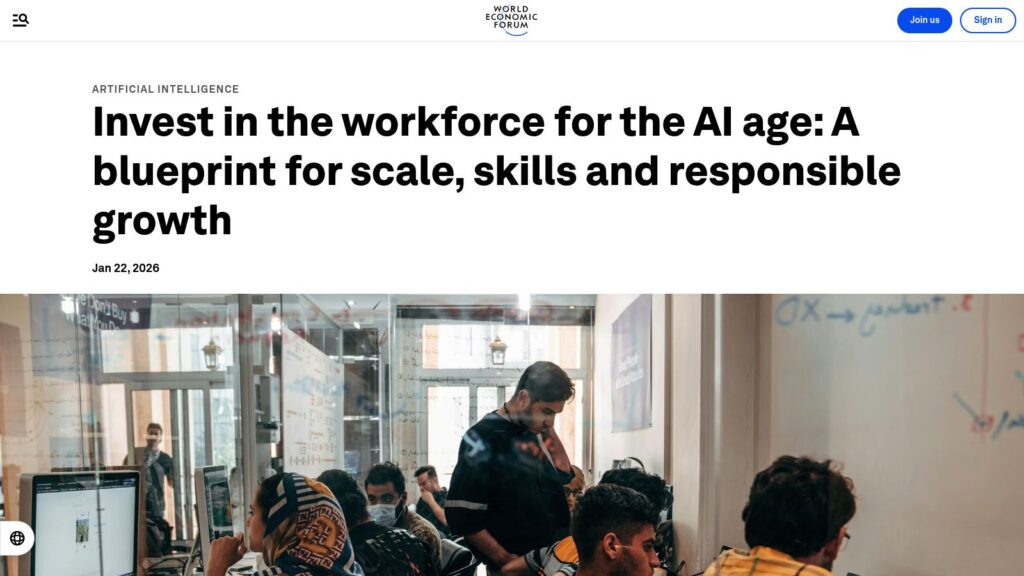
AI is transforming work, learning, and growth. Companies are adopting AI beyond pilot projects, embedding it into daily operations. A report from the World Economic Forum highlights progress and challenges in over 20 tech firms, noting that AI increases productivity but disrupts mid-level jobs more than entry-level roles. AI enhances efficiency and cultural engagement, but trust and governance are critical for scaling it. Upcoming initiatives aim to create equitable access to AI tools, improve skills, and provide job pathways. Collaborative action across sectors is essential for a prosperous and inclusive AI-driven future.

https://www.weforum.org/stories/2026/01/ai-at-work-insights/

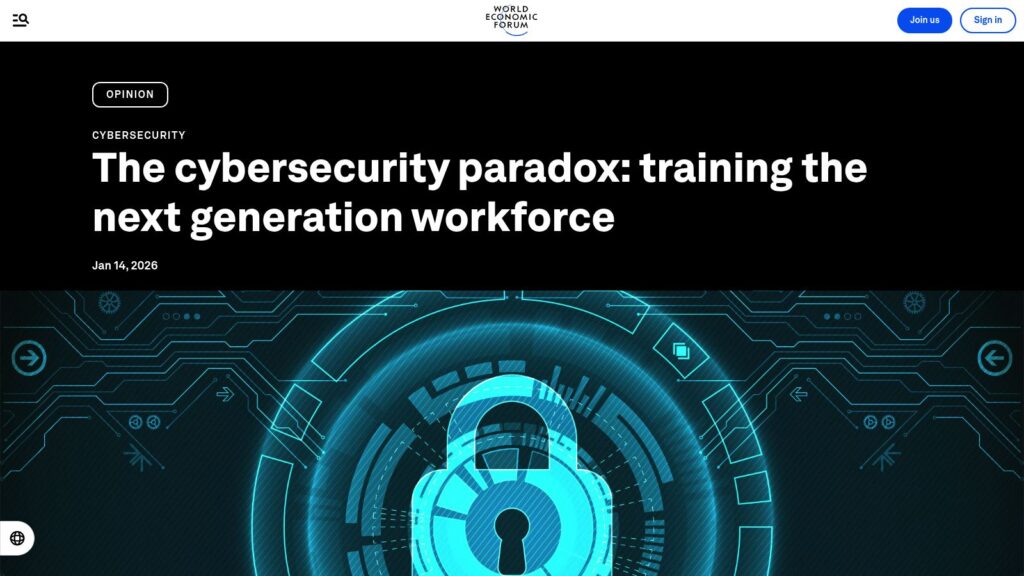
The Cybersecurity Paradox: Training the Next-gen Workforce

Cybersecurity now centers on securing human-AI interactions as AI becomes integral to workplaces. Workforce Trust Management is essential to address vulnerabilities from AI adoption, which brings both benefits and threats. Four pillars of security—Reliability, Accountability, Transparency, and Ethical Alignment—are crucial. Organizations must foster employee AI literacy and develop rapid response protocols to safeguard against potential breaches, ensuring a strong cybersecurity foundation while embracing AI’s potential.

https://www.weforum.org/stories/2026/01/cybersecurity-paradox-training-the-next-generation-workforce/

Forrester: Businesses Are ‘AI-washing’ Layoffs

Forrester reports that AI may replace 6% of U.S. jobs over the next four years, with 10.4 million jobs at risk by 2030. Companies could misuse AI advancements to justify layoffs under financial pretenses. While fears of massive job losses persist, productivity improvements from AI have been minimal. Organizations should prioritize governance and see AI as a tool to enhance human work, not replace it.

https://www.channeldive.com/news/forrester-businesses-ai-washing-layoffs-job-loss/809417/

AI Has Changed “the System in Which Work Happens” so the Workplace “Operating Model Has to Change With It”: Bloor Research

AI has transformed the workplace, requiring a new operating model according to Bloor Research. This model integrates human and digital labor, moving away from traditional human-only frameworks. Organizations must adapt design approaches to accommodate AI’s role and redesign workforce structures to enhance resilience and effectiveness, shifting focus from time-based roles to outcome-based strategies. Prioritizing collaboration across departments is essential for successful implementation.

https://www.unleash.ai/artificial-intelligence/ai-has-changed-the-system-in-which-work-happens-so-the-workplace-operating-model-has-to-change-with-it-bloor-research/

AI Workforce Strategy: From Planning to Real Value

AI workforce strategies often stall despite having the right technology due to organizational readiness, governance, and skills gaps. Success relies on integrating AI literacy among staff, effective governance, and robust data practices. Business leaders must align AI initiatives with measurable outcomes, while security teams ensure safe AI use. A people-first approach prioritizes training over technology, enabling organizations to turn AI from experimental to practical use.

https://www.comptia.org/en-eu/blog/ai-workforce-strategy-from-planning-to-real-value/

Klarna Tried to Replace Its Workforce With AI

Klarna’s attempt to replace workers with AI led to decreased customer satisfaction, revealing that simply automating tasks doesn’t improve service quality. Successful companies now focus on hybrid models where AI supports human workers rather than replacing them, enhancing efficiency by removing obstacles. This shift emphasizes collaboration between AI and people, highlighting the importance of understanding the unique strengths of humans in the workforce for better outcomes.

https://www.fastcompany.com/91468582/klarna-tried-to-replace-its-workforce-with-ai

A Shorter Workweek Can Prevent AI-driven Mass Unemployment

AI-driven layoffs are increasing as firms pursue short-term profits without planning for a sustainable future, risking mass unemployment. To address this, a shorter workweek could balance labor supply and demand, maintaining employment and economic stability. Public policy is essential to implement gradual reductions in work hours, ensuring workers benefit from technological advancements without sacrificing job security.

https://thehill.com/opinion/technology/5681660-shorter-workweek-ai-economy/

Allianz Taps Anthropic to Empower Workforce and Automate Operations

Allianz partners with Anthropic to integrate AI into insurance operations, focusing on employee empowerment, automation, and compliance. Key initiatives include providing access to AI models, developing agents for insurance workflows, and establishing AI audit trails. This aims to enhance efficiency while ensuring transparency and regulatory adherence, amid workforce restructuring and training programs for skill development.

https://nationalcioreview.com/articles-insights/extra-bytes/allianz-taps-anthropic-to-empower-workforce-and-automate-operations/

WEF Mapped Out 4 AI-driven Futures for Jobs by 2030, and Only One Looks Good for Humanity

WEF’s report outlines 4 AI-driven job scenarios by 2030, with only the “Co-Pilot Economy” minimizing worker displacement through skill augmentation. Other scenarios suggest varying levels of disruption, with rapid AI advancements outpacing adaptation leading to job loss. The future of work will depend on policy decisions and investment in skills, as experts express differing views on AI’s impact on employment.

https://www.businessinsider.com/wef-sees-4-ai-futures-for-jobs-by-2030-only-one-limits-disruption-2026-1

How Generative and Agentic AI Are Transforming Manufacturing: Solving Workforce Challenges and Driving Efficiency

Generative and Agentic AI enhance manufacturing efficiency, addressing workforce challenges. AI improves productivity and automates processes, offering significant ROI across various applications. AEM encourages embracing AI for organizational success.

https://www.aem.org/news/how-generative-and-agentic-ai-are-transforming-manufacturing-solving-workforce-challenges-and-drivin

The AI Revolution Is Here. Will the Economy Survive the Transition?

AI revolution is underway; experts debate its economic impact. Participants include Michael Burry, who critiques AI’s hype and spending surge post-ChatGPT, and Jack Clark from Anthropic, focusing on AI’s rapid capability growth via Transformers. They discuss AI’s past, current productivity issues, and uncertainty in sector competition. Despite AI’s advancements, widespread job displacement remains limited. Future market dynamics hinge on whether AI can create new spending without cannibalizing existing sectors. The discussion highlights the cyclical nature of AI investments, potential stranded assets, and the challenge of measuring true productivity gains. Overall, skepticism pervades about whether AI will yield significant economic value.

https://post.substack.com/p/the-ai-revolution-is-here-will-the

Humanizing the Workplace: Psychological Sciences Researcher Explores Ways to Combat Robotization of Asian American Employees

Research by Franki Kung at Purdue reveals U.S. Asians face mechanistic dehumanization at work, impacting employee satisfaction. Kung advocates for humanizing workplace practices that respect individuality, enhancing both employee well-being and organizational success. His work aims to create environments where employees feel valued and understood, addressing broader implications for all workers.

https://www.purdue.edu/hhs/news/2026/01/humanizing-the-workplace-psychological-sciences-researcher-explores-ways-to-combat-robotization-of-asian-american-employees/

Which Service Robots Will Dominate the Market in the Next 10 Years?

The service robotics industry is rapidly growing, with logistics and delivery robots projected to dominate the market, reaching over $60 billion by the next decade. Cleaning robots are expected to be the second largest market, surpassing $20 billion by 2036. While kitchen robots are currently a smaller market, they are forecasted to grow significantly over the next ten years.

https://www.idtechex.com/en/research-article/which-service-robots-will-dominate-the-market-in-the-next-10-years/34229

AI Layoffs Are Looking More and More Like Corporate Fiction That’s Masking a Darker Reality, Oxford Economics Suggests

Oxford Economics suggests that AI layoffs are often used as a cover for routine headcount reductions, rather than a result of automation. Companies may be attributing job cuts to AI to present themselves as innovative and to appease investors, rather than admitting to business failures. Despite headlines, data show that AI-related job losses account for only a small share of total reported job losses.

https://finance.yahoo.com/news/ai-layoffs-looking-more-more-210954693.html

Scroll to Top