hr

Talent Reinventors: Value in the Age of AI

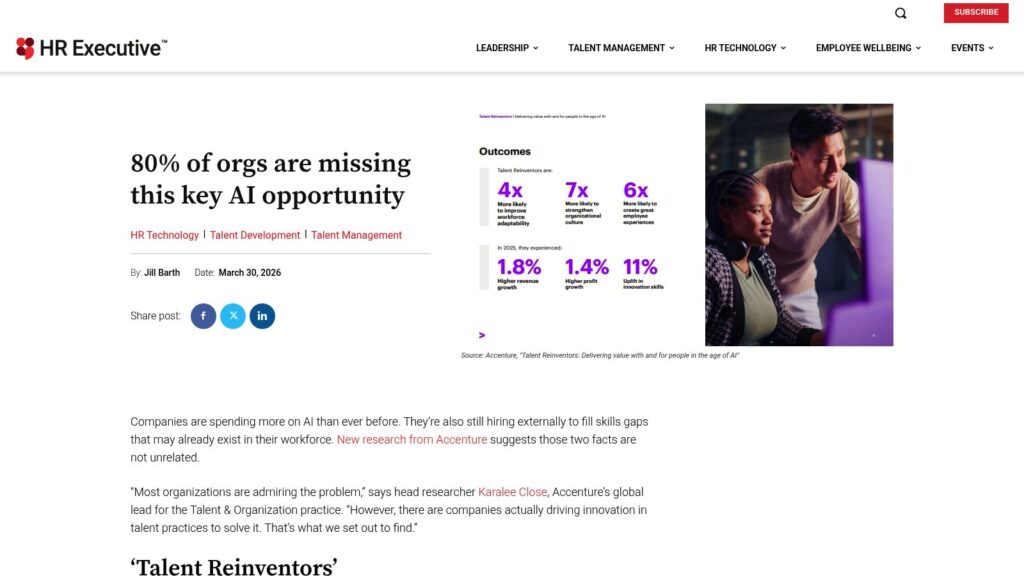
Accenture’s “Talent Reinventors” report highlights how organizations combining human talent with AI are achieving superior growth and workforce adaptability by reshaping work around shared goals powered by data and AI. The report identifies six key characteristics of these leaders—including clarity, intelligent teaming, talent mobility, co-learning, breakthrough leadership, and personalized experiences—that enable companies like Volkswagen, Microsoft, and Caterpillar to successfully integrate AI and people strategies, resulting in higher revenue, stronger cultures, and better employee experience in the rapidly evolving digital economy.

https://www.accenture.com/us-en/insights/consulting/talent-reinventors-delivering-value-people-age-ai?c=acn_glb_thefuture-readymediarelations_14261455&n=mrl_0226

America’s HR Leaders Say We’re Thinking About AI Agents All Wrong

Human resources leaders at major U.S. companies, including IBM and Microsoft, argue that AI agents should not be treated like human employees with names, job titles, or individual performance metrics, as this mindset undermines the technology’s full potential. They emphasize focusing on integrating AI into enterprise workflows for large-scale process improvement rather than managing AI as standalone “digital workers,” highlighting that accountability for AI-driven decisions must remain with humans.

https://www.wsj.com/cio-journal/americas-hr-leaders-say-were-thinking-about-ai-agents-all-wrong-7d8f1439

‘AI Workforce Reset’: Why Job Losses Don’t Tell the Full Story for HR Leaders

Australian HR leaders face a challenging paradox as AI-driven redundancies at major tech firms garner headlines, yet experts argue AI is reshaping rather than eliminating work, urging organizations to focus on upskilling and redesigning workforces for flexibility and psychological safety. HR specialists recommend shifting to skills-based hiring, promoting internal mobility, investing in targeted AI training, and fostering trust to manage workforce transitions effectively and turn the “AI workforce reset” into a strategic opportunity.

https://www.hcamag.com/au/specialisation/hr-technology/ai-workforce-reset-why-job-losses-dont-tell-the-full-story-for-hr-leaders/569556

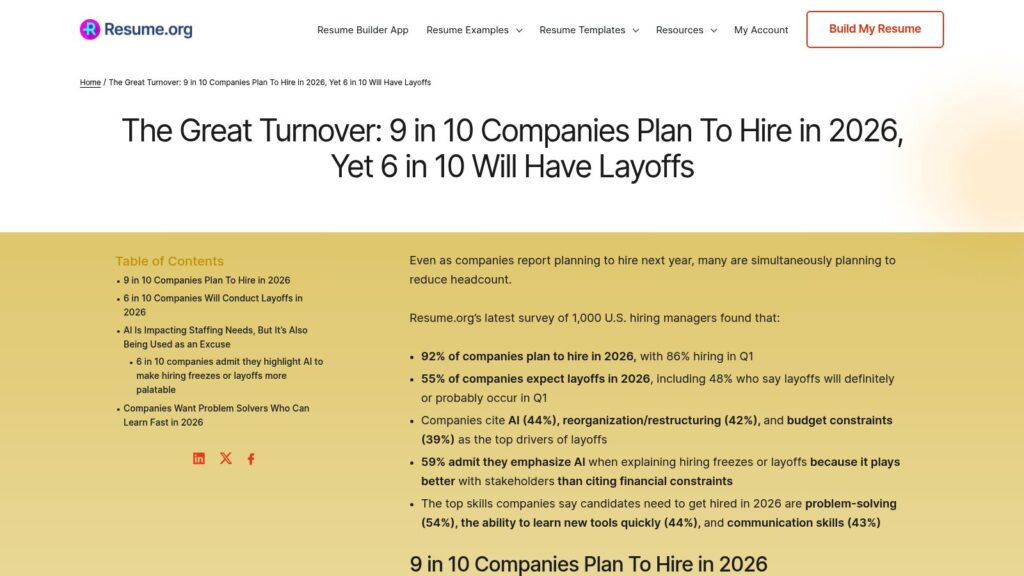
The Great Turnover: 9 in 10 Companies Plan To Hire in 2026, Yet 6 in 10 Will Have Layoffs

A Resume.org survey of 1,000 U.S. hiring managers reveals that while 92% of companies plan to hire in 2026, 55% also anticipate layoffs. Layoffs are driven by AI, reorganization, and budget constraints, with companies often citing AI to explain workforce reductions. The top skills companies seek in candidates are problem-solving, adaptability, and communication, highlighting the importance of practical, day-to-day performance skills.

https://www.resume.org/the-great-turnover-9-in-10-companies-plan-to-hire-in-2026-yet-6-in-10-will-have-layoffs-2/

HR Should Lead — Not Follow — Work’s Massive AI Transition

HR professionals must lead the charge in preparing their workforces for the AI transition. This involves identifying the underlying constraints that jobs are designed to solve and preparing for new constraints that emerge from AI integration. HR should prioritize training employees to work effectively alongside AI, focusing on skills such as emotional intelligence, decision-making, and managing AI tools.

https://www.shrm.org/topics-tools/news/hr-should-lead-not-follow-works-massive-ai-transition

Companies Work to Navigate Operational, Legal Challenges Associated With AI in HR Systems

AI in HR faces operational, legal challenges as firms adopt tools for hiring and analytics. Compliance concerns arise, especially with regulatory scrutiny over automated decision-making and data governance. The EU’s AI Act and GDPR mandate transparency and human oversight. U.S. states push similar regulations, increasing compliance risks. Organizations must ensure legal involvement in AI processes and vendor management while understanding technology limitations for effective oversight.

https://iapp.org/news/a/companies-work-to-navigate-operational-legal-challenges-associated-with-ai-in-hr-systems

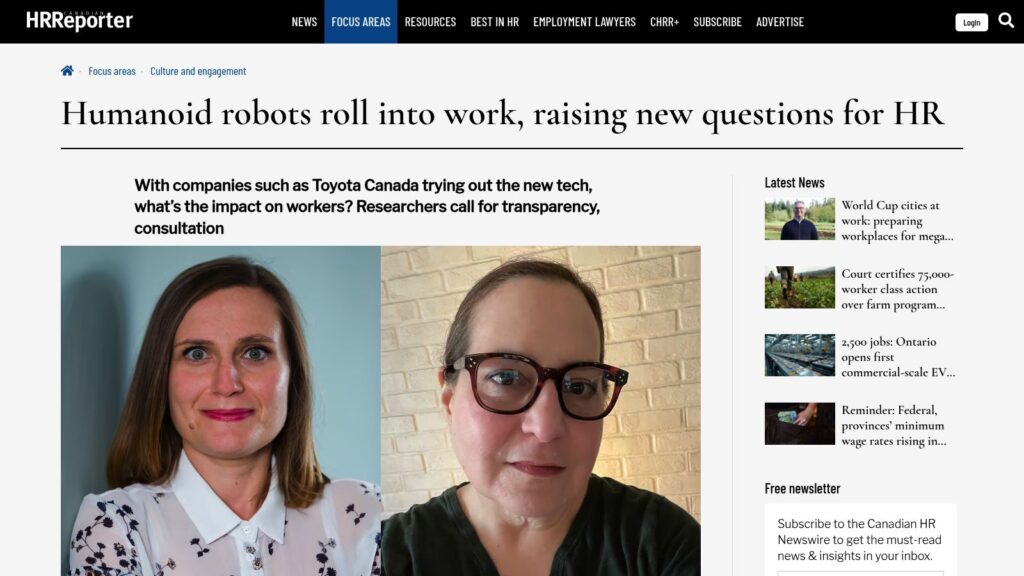
Humanoid Robots Roll Into Work, Raising New Questions for HR

Humanoid robots are entering workplaces, prompting HR concerns about employee impacts. Companies like Toyota and Canadian Tire are testing robots to reduce physical labor and allow staff to focus on higher-value tasks. Researchers emphasize the importance of transparency, worker consultation, and proper integration metrics to ensure technology enhances job satisfaction. However, potential issues include job insecurity, diminished social interaction, and the need for clear policies on interactions with robots. The success of these implementations hinges on effective communication between management and staff regarding the goals and impacts of automation.

https://www.hrreporter.com/focus-areas/culture-and-engagement/humanoid-robots-roll-into-work-raising-new-questions-for-hr/394146

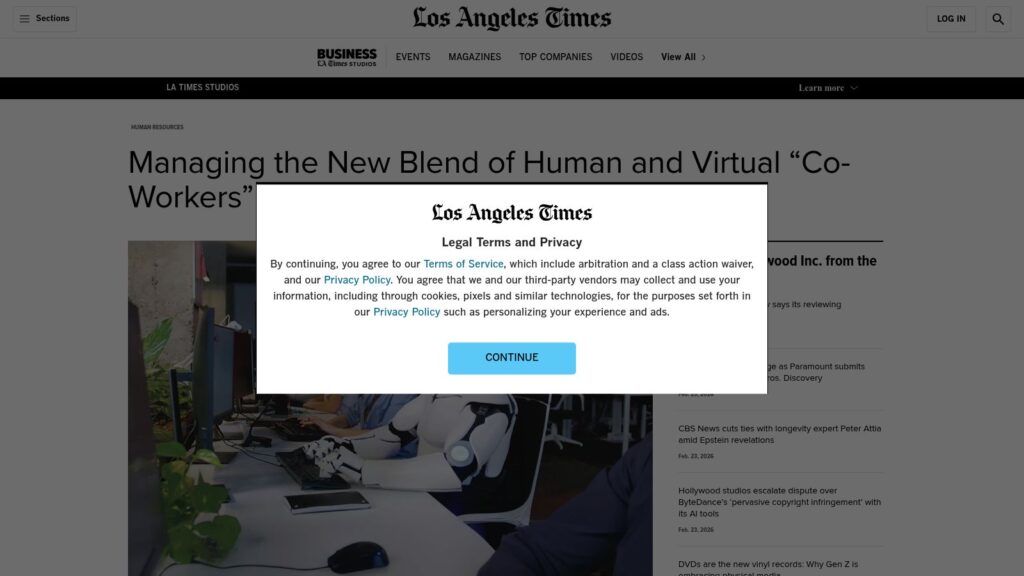
Managing the New Blend of Human and Virtual “Co-Workers”

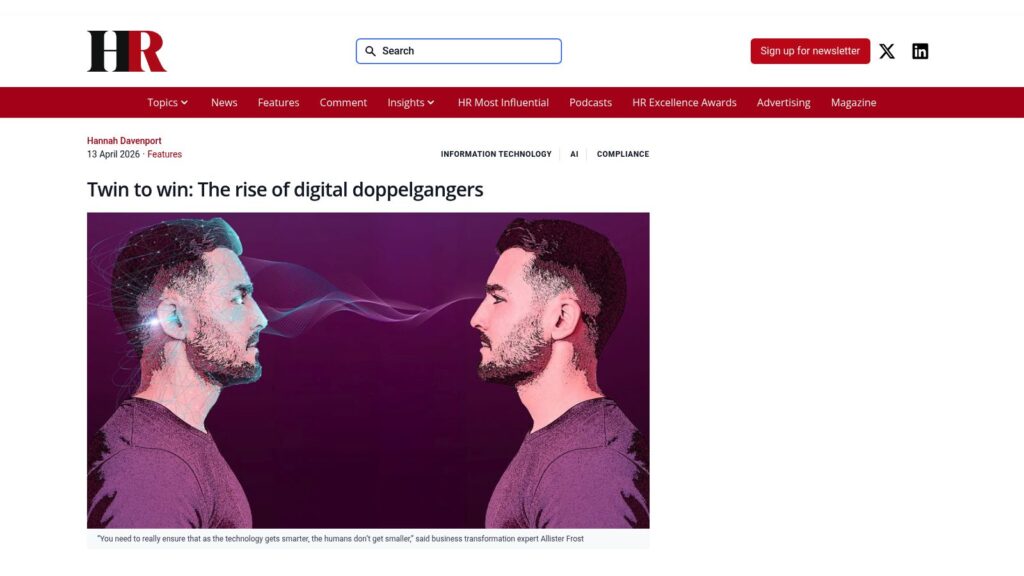
HR must adapt for 2026 as AI reshapes workplaces. Key trends include managing layoffs humanely, protecting employee mental health from AI, improving productivity, addressing recruitment fraud, safeguarding against corporate espionage, and supporting workers transitioning to skilled trades. Successful HR leaders will prioritize process optimizations over mere tech skills and develop compensation strategies for employees’ digital likenesses.

https://www.latimes.com/b2b/human-resources/story/2026-02-22/2026-future-of-work-trends-hr-leaders

AI Is Turning Side Hustles Into Second Careers — And Exposing a Policy Vacuum At Work

AI enables employees to pursue side hustles, transforming them into second careers while still working full-time. This trend challenges traditional job loyalty and requires companies to rethink engagement policies as more workers seek autonomy and diverse income streams. Organizations must adapt to this reality to avoid alienating talent and recognize the potential benefits of side hustles, which can enhance skills and innovation.

https://allwork.space/2026/01/ai-is-turning-side-hustles-into-second-careers-and-exposing-a-policy-vacuum-at-work/

Redefining Talent Through human-AI Integration

The rise of AI and automation threatens traditional entry-level roles, which are crucial for developing leadership skills. Organizations must intentionally redesign early-career work to preserve and accelerate human capability development, integrating AI literacy with leadership fundamentals and creating opportunities for critical thinking and co-responsibility in AI system improvement.

https://www.ey.com/en_gl/megatrends/why-shared-intelligence-will-redefine-talent

Culture Dissonance and AI Among Top Workplace Challenges in 2026

In 2026, organizations face major challenges like culture dissonance, as companies expect more from employees without equivalent returns, and negative effects from AI adoption. CHROs must prioritize human interactions in recruitment and address mental health issues linked to AI use, while combatting low-quality work production, referred to as “workslop.”

https://www.hrdive.com/news/culture-dissonance-negative-ai-effects-workplace/809768/

The AI-Ready CPO: Leading Transformation With Trust, Empathy, and Agility

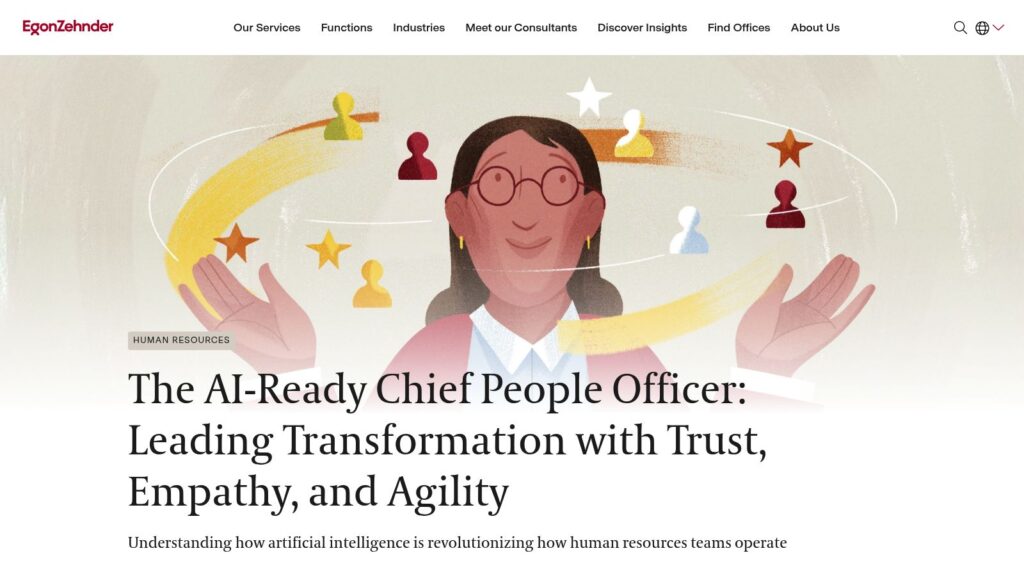
AI transforming HR, CPOs orchestrate human-digital workforce; focus on trust, empathy, and agility. Key imperatives: digital integration, workforce evolution, cultural change, and ethical governance. Challenges include data privacy, transparency, and change management. Emphasize human value alongside efficiency.

https://www.egonzehnder.com/functions/human-resources/insights/the-ai-ready-chief-people-officer-leading-transformation-with-trust-empathy-and-agility

McKinsey Starts Testing Job Candidates With AI Assistant

McKinsey is testing a new hiring method where candidates use the firm’s AI assistant, Lilli, during interviews. This pilot program evaluates candidates on their ability to engage with the AI while analyzing cases, aiming to reflect future consulting practices. If successful, this approach may standardize AI use in recruitment.

https://www.cio.com/article/4117688/mckinsey-begins-testing-candidates-with-an-ai-assistant.html

The Hiring Blind Spot: From Gut Instinct to Evidence in Skills-led Hiring

Shift hiring from resumes and gut instincts to evidence-based strategies using AI insights for real skills and potential. Traditional frameworks fail as they prioritize past experience over adaptability; a new mindset focused on measurable skills is essential. Align hiring practices with actual business needs, ensure fair AI assessments, and foster diversity by evaluating values and motivations. CHROs must adopt this dynamic approach to close skill gaps and meet future talent demands.

https://sea.peoplemattersglobal.com/article/ai-and-emerging-tech/the-hiring-blind-spot-from-gut-instinct-to-evidence-in-skills-led-hiring-47984

How AI Is Transforming Workplace Planning

AI is revolutionizing workforce planning by enhancing real-time talent analysis and strategic alignment with business goals. It supports skills-based hiring, predictive analytics for attrition and internal mobility, and scenario modeling for workforce needs. Organizations can leverage AI for effective skills mapping, continuous learning, and internal mobility, while ensuring ethical use in hiring decisions. By integrating AI thoughtfully, businesses can transform workforce planning into a dynamic process that enhances capabilities and career development opportunities.

https://www.peoplemanagement.co.uk/article/1944800/ai-transforming-workplace-planning

Scroll to Top