work

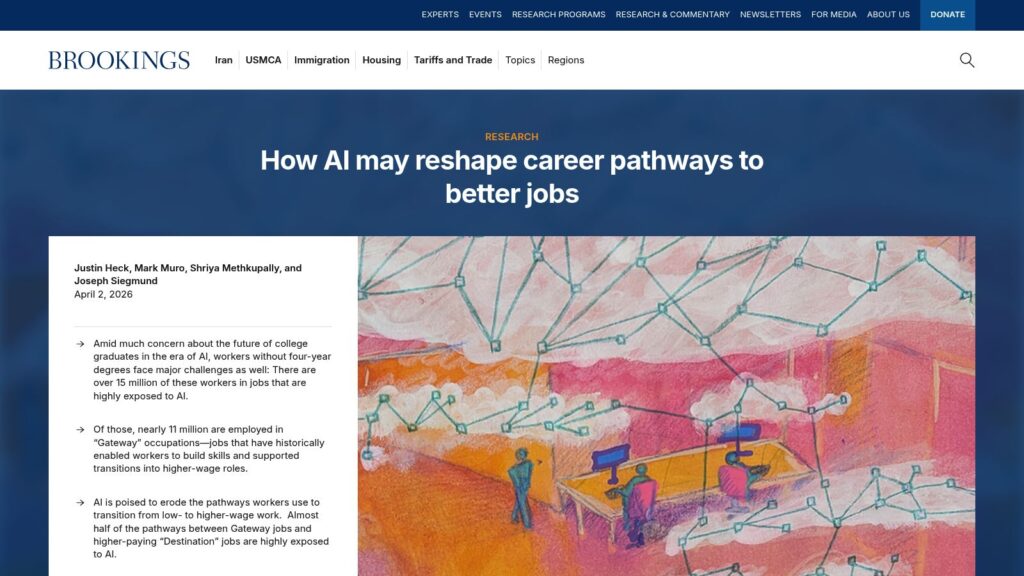
Anthropic Is Tracking Which Jobs Are Most Exposed to AI. These 10 Professions Top the List.

Anthropic’s research highlights U.S. jobs most at risk from AI, identifying many white-collar roles vulnerable. Despite concerns, current evidence suggests limited job loss attributed to AI, although future impacts may be significant. The top 10 most exposed professions include computer programming and customer service. Younger workers are increasingly drawn to skilled trades due to automation fears.

https://www.cbsnews.com/news/anthropic-ai-jobs-most-exposed-risk/

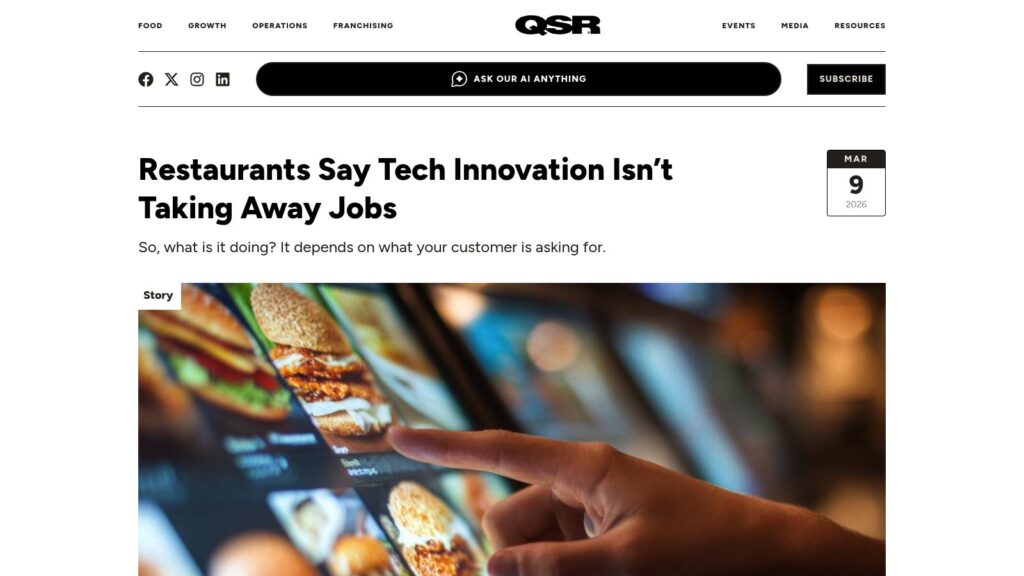
Restaurants Say Tech Innovation Isn’t Taking Away Jobs

Tech Impact on Restaurants:

  • Restaurant sales to hit $1.55 trillion by 2026, creating over 100k jobs.
  • Many see tech as beneficial; 67% of quick-service operators highlight its positive impact on ordering/payment.
  • Tech minimally affects job elimination (6% claim it does).
  • 80% of operators consider tech a competitive advantage; 60% plan to invest in enhancing customer experience.
  • Younger diners favor tech solutions for speed and ease in ordering.
  • Tech divides sentiment: 41% see it improving hospitality, 38% believe it detracts.
  • Operators (65%) largely view tech positively for hospitality, indicating a need for balance between efficiency and human interaction.

https://www.qsrmagazine.com/story/restaurants-say-tech-innovation-isnt-taking-away-jobs/

Current and Former Block Workers Say AI Can’t Do Their Jobs After Jack Dorsey’s Mass Layoffs: ‘You Can’t Really AI That’

Block CEO Jack Dorsey laid off 4,000 employees, claiming AI productivity justified the cuts. Workers argue AI can’t replace critical aspects of their roles, expressing skepticism about AI’s capabilities and frustrations over being required to develop tools that could replace them. There’s a growing sentiment of job insecurity and dissatisfaction among remaining employees, fearing increased workloads and customer dissatisfaction with AI-driven support. Overall, many believe current AI tools can’t fully substitute human expertise in the company’s operations.

https://www.theguardian.com/technology/2026/mar/08/block-ai-layoffs-jack-dorsey

Is Block’s Decision To Layoff 40% of Its Workforce a Bellwether Or Not?

Block Inc. plans to lay off 40% of its workforce (4,000 employees) and replace them with AI. CEO Jack Dorsey’s announcement lacks specifics. While AI is often perceived as a tool for eliminating jobs, it’s more about enhancing operational efficiency. Past studies indicate that job loss due to AI is less significant than anticipated, as it generally improves productivity without massive layoffs. Effective AI implementation requires re-engineering processes rather than simply cutting jobs. Companies must invest in infrastructure and staff for AI deployment, which can be costly. Therefore, AI’s real benefits lie in process transformation rather than outright job displacement.

https://joshbersin.com/2026/03/is-blocks-decision-to-layoff-40-of-its-workforce-a-bellwether-or-not/

Block Lays Off 4,000 Workers Citing AI. But How Much Does AI Actually Have to Do With It?

Block’s CEO Jack Dorsey announced layoffs of 4,000 employees (40% of workforce), attributing this to AI advancements. However, experts suggest overhiring during the pandemic contributed significantly to these cuts. While Block’s shares rose post-announcement, analysts believe the layoffs are a mix of AI efficiency and necessary organizational adjustments, rather than solely due to AI’s impact. Other tech companies like Salesforce and Amazon have also made significant layoffs, linking them partially to reallocating resources to AI. Despite industry cuts, job opportunities in tech still exist, particularly in medium-sized companies.

https://www.cbc.ca/news/business/block-layoffs-ai-9.7108981

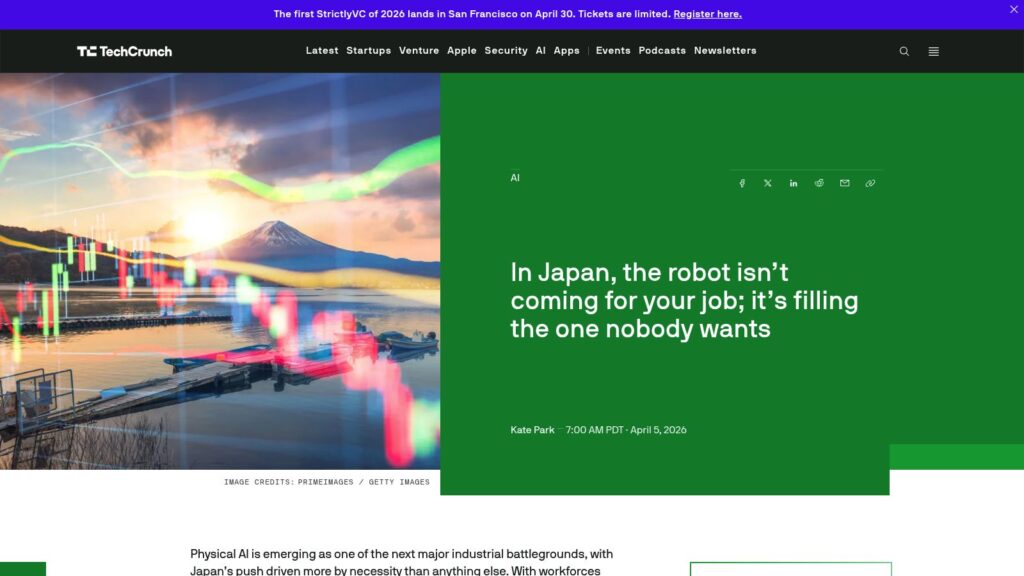
Delivery Robots Have His Old Job — and Now They’ve Created a New One for Him

AI delivery robots are replacing drivers, creating a new job: robot wrangler. These workers help robots navigate obstacles, provide maintenance, and ensure they operate effectively. Charlie Snodgrass, a former gig driver, is among the first to take on this role, checking and managing multiple robots daily as companies like Serve Robotics expand their fleets. Demand for such positions is rising as robots become more integrated into urban infrastructure.

https://www.latimes.com/business/story/2026-02-25/theres-job-that-ai-isnt-eliminating-robot-wrangler

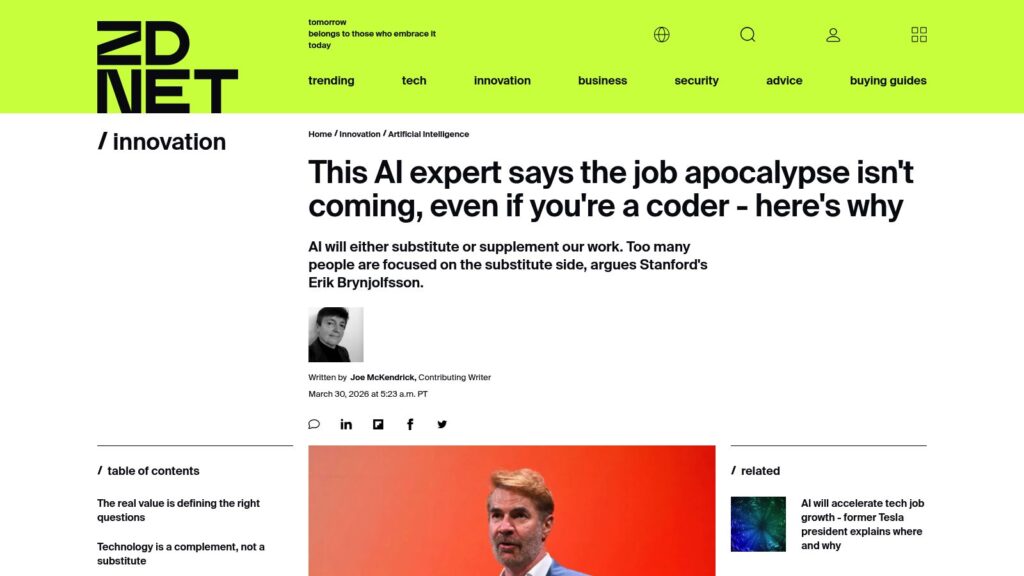
AI Will Either Save Work or Destroy It. Apparently.

The future of work and AI is uncertain, with opinions ranging from AI being a productivity savior to a job destroyer. While some argue AI will create new jobs, others worry about job downgrading and increased inequality. The key to navigating this uncertainty lies in improving AI literacy, upskilling, and experimenting with AI tools to ensure they enhance human work rather than replace it.

https://workplaceinsight.net/ai-will-either-save-work-or-destroy-it-apparently/

Token Anxiety

In 2026, San Francisco’s social scene is dominated by people obsessed with their AI agents, who constantly monitor and optimize their performance. The pressure to innovate and stay ahead is intense, leading to a culture of constant productivity and a fear of falling behind. This obsession permeates daily life, blurring the lines between work and leisure, and leaving little room for relaxation or reflection.

https://writing.nikunjk.com/p/token-anxiety

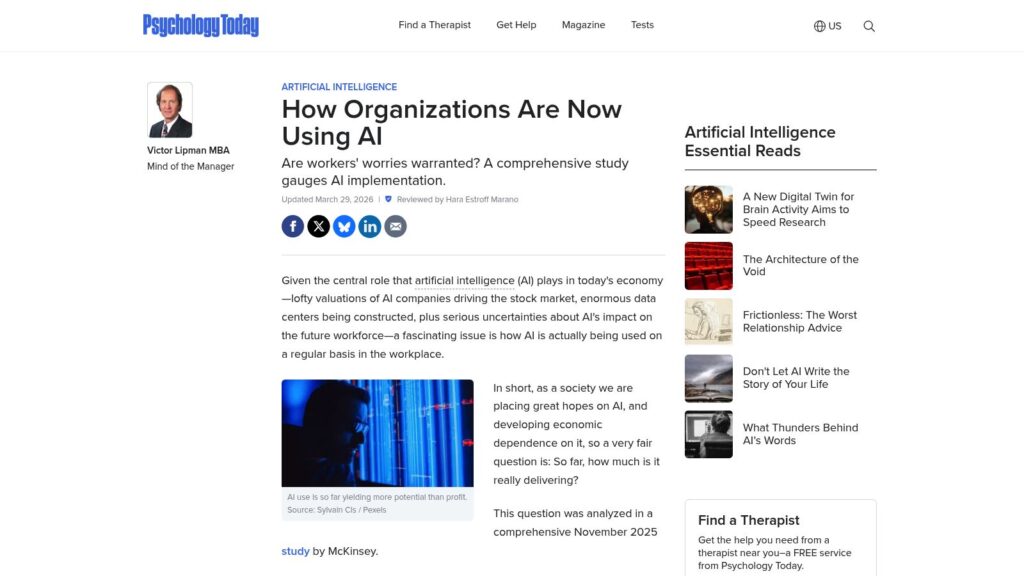
The AI Workforce Myth: Why Training Won’t Deliver Readiness

Organizations investing in AI readiness find that training alone does not produce business impact because it doesn’t change how work gets done or how AI is adopted. Structural barriers—outdated processes, missing governance, and roles not aligned with AI—limit adoption. Leading organizations redefine operating models by integrating AI into workflows, updating job descriptions, establishing governance, and creating performance-based incentives. They conclude readiness requires organizational redesign and change management, not just skill training. 

https://rsmus.com/insights/services/business-strategy-operations/why-training-wont-deliver-readiness.html

Huge AI Jobs Disruption Coming. What It Means For You.

AI’s job disruption is accelerating, causing concerns for industries like finance, insurance, and logistics. Major companies are freezing hiring or cutting staff due to AI’s increasing productivity, with predictions of significant headcount reductions. The unemployment rate among recent graduates is at a 12-year high, and overall job openings have dropped, signaling AI’s impact on employment. While some economists and Fed officials see resilience in the job market, fears of jobless growth are rising, highlighting challenges for young workers. Infrastructure jobs remain in demand, but overall, AI may render many roles redundant, leading to a complex economic landscape ahead.

https://www.investors.com/news/economy/ai-jobs-inflection-what-it-means-for-sp-500-fed-you/

The Doomsday Scenario for AI and Jobs

AI debate is polarized, with extremes on its utility, cognitive capability, economic impact, and morality. Four divides exist: usefulness, whether AI can think, if it’s a bubble, and its societal impact (good or bad). Current labor market shows minimal effects of AI, despite dire predictions. Scenarios range from AI’s slow integration boosting jobs to rapid displacement. History suggests AI won’t destroy jobs, as new tech usually enhances roles, but pressure from Wall Street favors quick cost-cutting measures. Politics around AI complicates bipartisan support, highlighting ideological divisions on job implications and technological governance.

https://www.derekthompson.org/p/568334c2-4122-4fe9-9435-5b2bdedae769

The Work Moved: What the AI Coding Debate Actually Agrees On

AI coding increased PR generation by 98% but slowed reviews by 91%, shifting work from coding to oversight and design. Perspectives vary on AI’s impact; while some highlight productivity gains, others see risks like “comprehension debt.” Best practices emphasize structured workflows and clear guardrails to mitigate risks of AI-generated code. The debate illustrates that the real work has shifted, and thus, understanding this transition is crucial for engineering teams.

https://leadership.garden/ai-the-work-moved/

Andrew Yang Says AI Will Wipe Out Millions of White-collar Jobs in the Next 12 to 18 Months

Andrew Yang warns AI will cause mass layoffs of white-collar jobs in 12-18 months, affecting mainly desk jobs like managers and marketers. Yang believes companies will competitively cut staff to please the stock market. The layoffs could impact local businesses serving affected workers. January saw record layoffs, with some companies citing AI as a reason.

https://www.businessinsider.com/andrew-yang-mass-layoffs-ai-closer-than-people-think-2026-2

Scroll to Top